Showing posts with label fall of eagles. Show all posts

Thursday, 23 June 2022

Edward the Seventh


This historical drama series was not made, as you might expect, by the BBC, but by ATV (who also made Sapphire & Steel) for showing on the ITV channel. It was first broadcast in 1975, although the copyright notice at the end of each episode implies it was made in 1973, which puts it either side of the broadcast of the BBC's Fall of Eagles.

While superficially similar series, and certainly there is a great deal of overlap in terms of the time period covered and the characters who appear, Edward the Seventh is generally lighter on dramatic incidents than Fall of Eagles - there is certainly nothing so shocking as the events of Requiem for a Crown Prince to be found here.

Edward the Seventh's strengths are to be found in showing us the functioning of international diplomacy and soft power between countries where the royal families were all related to one another by blood, marriage, or both, and also the influence the senior royals had upon the British governments throughout that period, despite supposedly being "politically neutral." It would therefore be fair to describe this series as interesting rather than thrilling, and it gives the lie to the idea that series made for commercial television are inherently more sensationalist (or lowbrow) than those made for public broadcasters.

The main character is Albert Edward, known as "Bertie" while he is the Prince of Wales (for 10 out of the 13 episodes) and Edward vii once he becomes king, and the series runs from his birth through to his death. As an adult he is played by Timothy West, although the first four parts concentrate on his childhood, where the main character is Prince Albert (Robert Hardy, once again proving that he was the prince consort king of historical dramas). Albert is shown as being an absolute cunt to his young son, and when you're watching this I expect that, like me, you'll think that his early death in 1861 (or at the end of episode four) can't come soon enough.

Queen Victoria (Annette Crosbie, if you can believe it) then dominates the series until she finally kicks the bucket at the end of part 10, and the middle of the series is about how Bertie, the heir to the throne, spends his time while he is being kept away from any real power by his mother.

The acting here is as good as in any other historical drama series I have seen (well... maybe not quite I Claudius levels) and we see various prime ministers of the era being played by distinguished actors, including Andre "Quatermass" Morell as Lord Palmerston, John Gielgud as Disraeli, Michael "Gandalf" Hordern as Gladstone, and Richard "Slartibartfast" Vernon as Lord Salisbury.


Kaiser Wilhelm (Christopher "Skagra" Neame, fresh from Colditz), is both Bertie's nephew and the closest thing the series has to an antagonist, what with the shadow of the first world war looming ever closer. However it is a storyline whose climax we never reach because the series concludes with the death of King Edward in 1910. We must therefore look to Fall of Eagles to see how Wilhelm's story ends (the clue is in the name).

The two series thus complement each other very well, with this showing the British side of some of the same events that Fall of Eagles shows from points of view on the continent. Some characters overlap, but are played with significant differences - most notably the kaiser, who Neame plays as an aloof and overbearing autocrat, because in Edward the Seventh he is an outsider and so we see only his public persona as perceived by the British royals, while Barry Foster's Wilhelm showed us the private manny.

Other characters in both series include Tsar Nicholas, here played by Michael "Paul Foster" Billington (not long after he was in UFO) in a big beard, and the kaiser's parents Fritz (Michael "not Jayston" Byrne) and Vicky (Felicity Kendall), who have a more substantial role here due to Vicky being Bertie's eldest sister.

The best episode of Edward the Seventh is part nine, Scandal, in which two scandals befall Bertie one after the other, neither of which are really his fault except through his poor choice of friends. The first concerns Colonel Gordon-Cumming (Donald "Major Grenlee in Rumours of Death" Douglas), caught cheating at cards while a guest of Bertie's (I guess some days really are better than others, mew), and then the second is Blake himself, Gareth Thomas as Lord Beresford, Bertie's former friend who threatens to beat him up, despite his status as heir apparent, for saying Avon is the best character siding against him in his own marital scandal.


(Also seen here is Peter "Saruman" Howell as Bertie's private secretary Francis Knollys.)

This episode also sees the death of Bertie's eldest son Edward, played by a very young Charles Dance. Edward dies of an illness, like several other main characters over the course of the series (eventually including the title character himself), and these deaths are inevitably accompanied by scenes of the family gathered around their loved one's bedside and waiting for them to get one last bit of acting in as they make a final speech.

Saturday, 17 July 2021

Five TV shows Patrick Stewart was in before Star Trek: The Next Generation

So synonymous has Patrick Stewart become with his baldy-headed English-French captain of the Starship Enterprise, who he played from 1987 until 2002 (and then recently brought out of retirement again for one last job), that it is easy to forget that he already had a long and distinguished list of film and TV credits to his name before he ever made it so.

Here are five of my personal favourites from British TV shows.


#1. Civilisation (1969)
 
Civilisation, if you’re unfamiliar with it, was Kenneth Clark (Not That One)’s 13-part BBC documentary series about the history of western civilisation from the Dark Ages to the 20th century, as seen through the lens of its art. It recently got a sequel series, almost 50 years after the original, but is probably best known today for inspiring the long-running series of computer strategy games of the same name… if not the same spelling.

By episode six, Protest and Communication, Clark’s chronological approach has reached the time of Shakespeare, and he illustrates the Swan of Avon (Not That One)’s contribution to civilisation with three scenes from his plays: King Lear, Macbeth, and Hamlet, with actors brought in specially to perform the scenes.

In the excerpt from Hamlet (act 5 scene 1), Patrick Stewart is Horatio to Ian “House of Cards” Richardson’s Hamlet and Ronald “Avon’s friend” Lacey as the Gravedigger. Horatio has by far the least lines of the three, and with the benefit of hindsight it seems a waste to get Patrick Stewart in just to say lines like
“E’en so, my lord.”
but nevertheless it is umistaikably him, and it is amazing to see how little he has physically changed over the years from how he looks in this very early TV appearance.


#2. Fall of Eagles (1974)
 
I have already discussed Fall of Eagles extensively on this blog. Here Patrick Stewart is playing Lenin, and as such is in one of the five(ish) most important roles in the series. For all that, he’s only in three of the 13 episodes, with the second of these, Absolute Beginners being one of the very best of the series largely thanks to Stewart’s amazing, powerful performance.


#3. I Claudius (1976)
 
The next time Patrick Stewart would turn up in a BBC historical costume drama it would be in a bad wig as Lucius Sejanus, the ruthlessly ambitious captain of Tiberius’s praetorian guards, in four episodes of I Claudius. He makes his first appearance in the scene after the one where Augustus dies, and helps to fill the hole left by the departure of BRIAN BLESSED’s larger-than-life character. In the following episodes we see Sejanus’s scheming gradually come to the fore, as he plans to marry his way into the imperial family and remove all those standing in the way of his rise to absolute power.

Even acting alongside the likes of George Baker, Derek “Shakespeare-denier” Jacobi, and of course Sian Phillips as Livia, Stewart makes his portrayal memorable as we see his two-faced machiavel rise and rise and then, eventually, fall. It is with Caligula’s help that Sejanus is finally brought down, paving the way for the unforgettable performance by John Hurt to dominate the next phase of the series.


#4. Tinker Tailor Soldier Spy (1979) and Smiley’s People (1982)

When the BBC adapted the first and last parts of John le CarrĂ©’s ‘Karla trilogy’ they were obviously going to need somebody to play Karla, head of the Soviet Union’s “13th Directorate” and the hidden antagonist behind Gerald the mole and all the plots against George Smiley’s secret service “Circus.” Well, I wouldn’t be mentioning it in this article if they hadn’t chosen Patrick Stewart for the part.

Because Karla is seldom encountered directly, for all that his long shadow is cast over everything that occurs in both stories, the part is much smaller than you might expect for what is essentially the main baddy. (Exactly how small? Well, if you’ve seen it you’ll already know what I mean. And if you haven’t…) But that just makes it all the more remarkable how much Stewart does with so little. Alec Guinness is rarely challenged in the acting stakes throughout either series, but when he’s on screen with Patrick Stewart, it is Stewart that you have to watch – partly that’s because we see so little of Karla that his scenes stand out the more, but it’s also because Patrick Stewart steals those scenes out from under him.


#5. Playing Shakespeare (1982)

Well I began with Shakespeare, and this final entry brings us full circle. In 1982 a nine-part documentary series was shown on ITV about theatre director John Barton, with help from a bunch of actors from the Royal Shakespeare Company, giving a ‘masterclass’ with examples of how they go about preparing to put on Shakespeare plays. The list of actors involved include some very well known names, including Ben Kingsley, David Suchet, Donald Sinden, Jane Lapotaire, Judi Dench, Serena McKellen, and (of course) Patrick Stewart.

Patrick Stewart appears in five of the nine parts, but he is mainly featured in one episode in particular, Exploring a Character, which sees Barton discussing with him and David “Purrot” Suchet the similarities and differences in how they each played Shylock in The Mov. Now you might think that 50 minutes of that would be boring but, on the contrary, I found it anything but, and could happily have watched them continue for twice as long or more. Especially interesting were the bits where Stewart and Suchet would perform a scene together, then afterwards swap roles and do the same scene again in a different – sometimes only subtly different – way.

The series has moments of pretentiousness and can slip into jargon at times – it was deservedly mocked for such by Nigel Planer in his Nicholas Craig The Naked Actor series – but Barton is aware of this and so does not take himself too seriously (at one point referencing an early sketch by Fry & Laurie in which they sent up exactly this type of luvvie pretentiousness), which helps make the series fun. Shakespearean language has a reputation of being dull and difficult among mannys who were bored rigid when taught it badly in their schools, but this series makes the subject not only fascinating, but approachable and comprehensible.

Sunday, 26 August 2018

Fall of Eagles: End Game


The final part of Fall of Eagles is all about the last days of World War 1, as the German army is losing to the Americans and Germany is threatened from within by Bolshevik revolutionaries - the very forces Kaiser Wilhelm unleashed in The Secret War to try and win the war have come back to nom him.


At a meeting with his senior generals and new Chancellor (Erik Chitty, Engin in The Deadly Assassin), it becomes clear that the best the Kaiser can hope for is to save his dynasty from sharing the fate of the Romanovs in Russia - not to win the war, just to lose it as little as possible. The episode becomes a character piece, focusing on Wilhelm's slow acceptance of just how bad the situation is, and how much of it is his fault.


A young Colin Baker appears here as the Kaiser's son, "Little Willie" (lol). Yes, he is even credited as that on-screen.

Little Willie is shown to take after his father, and is if anything even more useless - we see him sneak away from a staff meeting to take a telephone call from his mistress, and he is completely indecisive when it comes to military decisions. So much for the future of the Hohenzollerns.

In the key scene for the episode, Kaiser Wilhelm is left alone by a fire to decide what to do. He makes a self-pitying speech in which he flip-flops between fighting to the end and running away, before eventually deciding to abdicate and flee to safety in Holland. Barry Foster has been superb as Wilhelm throughout the series, but this may be his finest moment because he is carrying the emotional scene single-handed.


With the decision made and the Kaiser gone, it is left to Field Marshal Hindenburg (Marius Goring, Maxtible in Evil of the Daleks) to sort out the mess Wilhelm has abdicated left behind. He telephones the Social Democrats in Berlin and the army teams up with them to stop the Bolsheviks from taking control.


There is a lot of telephoning between characters in this episode. The Germans aren't nearly as scared of it as Franz Josef was back in Indian Summer of an Emperor. There is a line of ironic foreshadowing for beyond the end of the series as Hindenburg says to the leader of the Democrats
"Yes, we must hope for favourable terms at the peace treaty."


With its end date in 1918, this 100-year anniversary seemed an appropriate time to look back on Fall of Eagles (since mannys like multiples of ten for some reason). It is one of the forgotten classic BBC historical drama series, with comparatively little written about it on the internets. This seems a shame to me, as it holds up well today, and I would definitely recommend it to anyone with an interest in classic BBC historical drama series... which I presume includes most mannys, and all cats.

Sunday, 19 August 2018

Fall of Eagles: The Secret War


The Secret War picks up from where Tell the King the Sky is Falling left off - Rasputin has been shot till he was dead, and this has encouraged the members of the Duma to further defiance of the Tsar.

One such member is David Collings, returning from all the way back in The Last Tsar to prove that the nature of Miliukov is irrepressible! He demands the resignation of the Tsar's entire government. Then Kerensky, played by Jim "Bishop Brennan" Norton, goes even further and demands the resignation of the Tsar.


The one thing the Duma agrees with the Tsar about is that they want to keep World War 1 going until they can beat Germany.

Meanwhile Kaiser Wilhelm is meeting with his generals, admirals, and his Chancellor Bethmann-Hollweg (Peter Copley returning from Indian Summer of an Emperor). He is older and starting to show the strain of the BBC aging make up. The war is not going well for Germany, and the Kaiser claims
"I did not want this war."
suggesting that he has not been watching the series as carefully as we cats have. The generals and admirals have suggestions to make, one of which is to get the Americans to help out by attacking them until they join the other side... teh satires!111

Bethmann-Hollweg has a plan to get some revolutionaries to take over Russia who will want to make peace, but seeing as the wrong sort of revolutionaries are taking over Russia right now then this will mean getting Lenin and his Bolshevik friends to come back from Absolute Beginners to do it.
The Kaiser doesn't like this plan, but he has to go along with it.


Lenin is now in Switzerland with his wife and Zinoviev (John Rhys-Davies, who would later play Macro alongside Patrick Stewart's Sejanus in I Claudius), and while they want to go back to Russia to join in the revolution, they don't want any help from Germany to do it in case it makes them look like traitors.


Bethmann-Hollweg and the Kaiser make contact with Dr Alexander Helphand (Michael "Toymaker" Gough) to arrange help for the Bolsheviks from Germany without it looking like the help comes from Germany. Helphand is possibly the most cynical character in the series, as we see when he tells Glazkov, his Bolshevik go-between,
"Life is odd, isn't it? I buy coal from the Germans and sell it to the Russians. Copper, tin, aluminium and steel. German steel to make Russian guns... to kill German soldiers. This is a capitalist war, my dear Glazkov - industrialists don't care who buys from them so long as they make a profit. That is what wars are all about: profit. The only thing the Germans don't know is that most of the profit I make here finds its way, eventually, into the hands of the Russian revolutionaries."

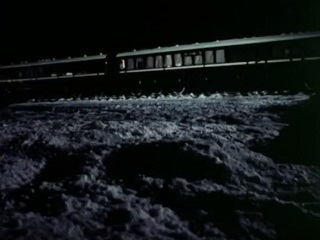
Back in Russia the army revolts and the Tsar is forced to abdicate while trying to get home on a train (making this one of the worst commutes ever, lol). Charles Kay puts a lot of emotion into his acting for his last scene, we might almost feel sorry for him and forget how this is Nicholas's own fault for being so useless. The final shot we see of him in Fall of Eagles emphasises his loneliness as it jump-cuts three times, further and further away from him each time - sort of like the ending to Blake in reverse.


This is a great episode, but it saves the best for its last few minutes, as Lenin and the Bolsheviks are on the train to take them home to Russia. They don't know what sort of welcome to expect, and are worried they might get arrested straight away. But, in contrast to the Tsar's recent train experience, when they get to St Petersburg they receive a triumphant heroes' welcome, with hugs and kiffs from soldiers and strangers, and a band playing music for them.


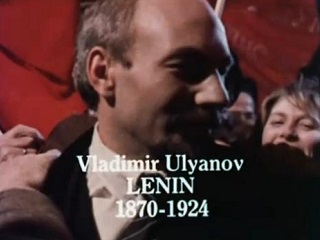
Lenin even gets a freeze-frame and superimposed caption with his name and dates to end the episode on, which no other characters get.

Watching this you might take away that Lenin is the hero of the whole series, except that he didn't really do anything - the Tsar managed to bring about his own Fall through being rubbish at being an autocratic ruler. He has this in common with the other two Eagles, as we shall see next time in the final episode.

Sunday, 12 August 2018

Fall of Eagles: Tell the King the Sky is Falling

There lived a certain man, in Russia long ago
He was big and strong, in his eyes a flaming glow
Most people looked at him with terror and with fear
But to Moscow chicks he was such a lovely dear
He could preach the Bible like a preacher
Full of ecstasy and fire
But he also was the kind of teacher
Women would desire


Ra! Ra! Rasputin!
Lover of the Russian Queen
There was a cat that really was gone
Ra! Ra! Rasputin!
Russia's greatest love machine
It was a shame how he carried on

He ruled the Russian land and never mind the Tsar
But the kazachok he danced really wunderbar
In all affairs of state, he was the man to please
But he was real great when he had a girl to squeeze
For the Queen he was no wheeler-dealer
Though she'd heard the things he'd done
She believed he was a holy healer
Who would heal her son


Ra! Ra! Rasputin!
Lover of the Russian Queen
There was a cat that really was gone
Ra! Ra! Rasputin!
Russia's greatest love machine
It was a shame how he carried on

But when his drinking and lusting
And his hunger for power
Became known to more and more people
The demands to do something
About this outrageous man
Became louder and louder

"This man's just got to go!" declared his enemies
But the ladies begged, "Don't you try to do it, please"
No doubt this Rasputin had lots of hidden charms
Though he was a brute, they just fell into his arms
Then one night some men of higher standing
Set a trap, they're not to blame
"Come to visit us" they kept demanding
And he really came


Ra! Ra! Rasputin!
Lover of the Russian Queen
They put some poison into his wine
Ra! Ra! Rasputin!
Russia's greatest love machine
He drank it all and said "I feel fine"

Ra! Ra! Rasputin!
Lover of the Russian Queen
They didn't quit, they wanted his head
Ra! Ra! Rasputin!
Russia's greatest love machine
And so they shot him till he was dead

Oh, those Russians...

I was really looking forward to this episode, but sadly Rasputin is not played by a cat, he is played by Michael Aldridge (Percy Alleline in Tinker Tailor Soldier Spy).

This episode of Fall of Eagles tells the story of how World War 1 goes badly for the Russians because of factional infighting between the mannys who would be most capable of running the war (or at least who think they would be best at it), and those who are in their positions only because they are friends with Rasputin and have gotten him to use his influence with the Tsar and Tsarina. As a result the character of Rasputin dominates the episode, even though he only actually appears in a pawful of scenes.

The main point of contention is the appointment of the incompetent Protopopov (why does Protopopov have four o's in his name? Because otherwise he'd be Prtppv, mew) as Minister of the Interior, a vital government job and responsible for supplying the Russian army with all of the things it needs to do a war properly.


Protopopov is played by Hugh Burden (the sinister Channing in Spearhead From Space), while his arch-rival is his former boss and president of the Russian Duma (which the Tsar keeps changing his mind about abolishing) Rodzianko, played by Charles "It's just a jump to the left" Grey.


Things get worse when the Tsar takes personal command of the Russian army, with General Alexeiev (Nigel "Do Not Forsake Me Oh My Darling" Stock) to advise him. For 'advise him' read 'actually do everything because the Tsar is completely useless.'

This is popular at first, but then after a while the Tsar can no longer escape being blamed for how badly the war is going for Russia.


With the Tsar away at the war and Empress Alexandra left in charge back in the capital city, Rodzianko is brought into the conspiracy by members of the Tsar's own family, who are worried that Rasputin's influence over the Empress is so great that he is now ruling Russia from behind the throne.

As with many pivotal events in Fall of Eagles, we don't actually see Rasputin's assassination. Instead, in the final scene in which he appears, Rasputin prophesises his imminent death, as well as a few other future events in that suspiciously accurate way that prophecies in historical TV series tend to be (see also the propecies of Thrasyllus and the Sibyl in I Claudius).

"I will tell you something - I will not last out this year. My life will be taken. I know that. And after I have gone, everything will fall. God will be mocked, and Russian will turn against Russian. The ordinary people will take the broken pieces of Russia into their own hands."

Sunday, 29 July 2018

Fall of Eagles: Indian Summer of an Emperor


This episode introduces us to World War 1, which is an underrated war (usually it gets overshadowed by its more famous sequel) probably best known these days for its appearances in Blackadder Goes Forth.

To begin with there is little sign of what is to come. The focus here is back on Austria, where Emperor Franz Josef is now very old and his ministers and generals are preparing for when his nephew and heir, Archduke Franz Ferdinand, will take over.


They are represented here by Count Conrad von Hotzendorf, played by T P McKenna (Ex-President Sarkoff in Blakes 7's Bounty, Captain Cook in Doctor Who's Greatest Show in the Galaxy), and form an unofficial party in opposition to the the Emperor - the sort of thing that Bismarck prevented Crown Prince Frederick from doing in Germany all the way back in episode two.


Speaking of Germany, Archduke Franz Ferdinand is great friends with Kaiser Wilhelm, and they go hunting bunnies together. (I'm not sure why mannys need shotguns to go hunting bunnies, unless...)
Franz Ferdinand is played by Peter Woodthorpe, his voice unmistakable: the one true Gollum and Pigsy.

Franz Ferdinand has fallen out with Franz Josef over his decision to marry someone that Franz Josef doesn't think is important enough, and as a result he gets on better with the Kaiser than with his own uncle. To assert his independence from the Emperor, Franz Ferdinand decides to take his wife with him to Sarajevo where he thinks they will be appreciated and where he can get assassinated properly.

Emperor Franz Josef does not have much luck with his heirs in this series, seeing as the last time we had an episode focus on Austria we saw his previous heir, his son Rudolf, die.


As is typical for Fall of Eagles, Archduke Franz Ferdinand gets assassinated off screen between scenes, and we instead see only the repercussions as the Emperor is informed. Even though this is a serious moment - a turning point in history, even - there is time for a humorous, farcical scene as Franz Josef has to break the bad news to his nephew Karl that he is the new heir over the telephone, a newfangled contraption that the aged Emperor struggles to cope with.

The second half of the episode shows the aftermath of the assassination, with Franz Josef not wanting to have a war, and in fact secretly a bit relieved that Franz Ferdinand is not going to be the next Emperor any more, but his ministers and generals try to push him into war so that Austria does not look weak in front of the other countries.


The Kaiser also wants war, and he and his new Chancellor Bethmann-Hollweg (Peter "Dr Warlock" Copley) push their ally into attacking Serbia by promising all the help Austria might need if any country were to declare war right back at them.

The episode's final scene is blackly humourous with the hindsight of what will follow, as the British receive the news of the assassination and decide that it is nothing for them to worry about.

Sunday, 22 July 2018

Fall of Eagles: Dress Rehearsal

Dress Rehearsal is part 9 of 13 and yet is the first to feature all three "Eagles" within the same episode. Even then the focus is on Russia, with Kaiser Wilhelm and Emperor Franz Josef limited to a one scene cameo each, and none of them appearing together.


The main character of the episode is Russia's egotistical foreign minister Baron Isvolsky, excellently played by Peter "Denethor" Vaughan. He has a plan to force the Ottoman Empire to open the Bosphorus strait to the Russian fleet by getting all the other countries of Europe to side with Russia against the Ottomans.


The Tsar has expressed his wish for this, but the new prime minister Stolypin (Frank Middlemass, a Shakespearean actor who I recognise from playing the Fool in King Lear and Cardinal Beaufort in the Henry vi plays, as well as the Master of Baillie College in Yes Minister) predicts that Russia will have to give away more in concessions than they will gain from it.


Most of the episode sees Isvolsky proving Stolypin right, as he travels Europe meeting important minor characters representing their countries, including French foreign minister Clemenceau, played by John "Li H'sen Chang" Bennett (proving he can play a Frenchmanny just as easily as a Chinamanny).

The trouble is that Isvolsky is not nearly as clever as he thinks he is, and it is with the Austrian foreign minister Aehrenthal that he more than meets his match - agreeing that Russia will recognise an Austrian annexation of Bosnia, which would mean betraying Russia's supposed ally Serbia, and foolishly doing so in writing without the agreement of the Tsar or Stolypin.

Then when Austria annexes Bosnia straight away, before Isvolsky is finished making all his deals, Russia has effectively given away Bosnia for nothing. This leads to a great scene where the German ambassador makes it plain to Isvolsky how outmaneuvered he has been, and that he has to go along with what the Germans and Austrians want if he does not want the secret deal made known, or else shoot himself. The First World War only fails to start several years early when Russia backs down.

In the end Britain's King Edward vii asks his foreign minister Grey if all this politicking and backstabbing has been worth it for anyone - all that has been achieved is the change of status of Bosnia from occupied puppet to an annexed part of the Austrian empire (it sounds to me like he's been playing Civilization V). But it has firmed up the alliances between Britain, France and Russia, and between Germany and Austria. The two mannys realise that if a war happens, it will be between these two sides.

Sunday, 15 July 2018

Fall of Eagles: The Appointment

In a way almost the mirror image of Absolute BeginnersThe Appointment is another episode heavy with politics, but this time showing the Russian government's counter-revolution following on from the events of 1905, as seen in the preceding episode Dearest Nicky.

After the assassination of the Tsar's uncle Grand Duke Sergei leads to the sacking of the chief of the police (who is also the chief of the secret police), Nicholas has to choose a successor. Sergei Witte returns from The Last Tsar to make the liberal case for a reformer, but he is up against a conspiracy led by Interior Minister Trepov (David "Drop the Dead Donkey" Swift) to appoint somebody both reactionary and ruthless enough to preserve the status quo in Russia... even if that means going so far as to replace the Tsar himself.


The conspiracy's candidate is Theodore Rachkovsky, played by Michael Bryant, and most of the episode focuses on his attempt to get "the appointment" of the title. Persuading the Tsar is the easy bit, he must also win over the Empress Alexandra, who got him sacked from the job once before for spying on her favourite holy manny du jour, one Father Phillipe. Rachkovsky maintains he was "a charlatan" and, while we don't meet this Phillipe, from his description alone he seems to foreshadow the coming of Rasputin.

Michael Bryant already had form for turning up in a single episode of a series and walking off with it, as this was made two years after he played Wing Commander Marsh in the Colditz episode Tweedledum. His performance here is every bit as compelling as Patrick Stewart's Lenin was in Absolute Beginners, and he almost single-handedly makes this one of the better installments of Fall of Eagles.

Sunday, 1 July 2018

Fall of Eagles: Dearest Nicky


The middle of the series, and this is the first plot to properly crossover two of the countries. The framing device is Kaiser Wilhelm writing letters to Tsar Nicholas to offer him unsolicited advice on how to rule Russia, beginning each one with the "Dearest Nicky" of the title. He also likes sending the Tsar awful allegorical paintings featuring the two Emperors in the picture (and with the Kaiser depicted more flatteringly than the Tsar), which the Russians are too diplomatic to refuse.

Nicholas and Alexandra are, to begin with, more concerned with their pet project of getting a supposed holy manny canonised as a saint than the business of government, to such an extent that Nicholas prefers seeing the Archbishop (John Welsh, probably best known for being the Emerald Seer in Krull) over meeting with his ministers.

This changes when Japan attacks Russia and starts a war. Both Tsar and Kaiser show their racism, calling the Japanese "little yellow men", and expect an easy Russian victory to begin with. Early signs that this will not be the case come when Russian naval incompetence leads to the Dogger Bank incident - we don't see this on screen, of course, just hear about it through the medium of the Kaiser's exposition-delivering letters.


Father Gapon (Kenneth "Admiral Piett" Colley) is a priest who is also a police spy in a trade union, but after von Plehve gets assassinated (a black comedic moment as he tries to close his carriage door to keep the bomb out, only to shut himself inside with it) he properly goes over to the side of the union and begins a strike that leads to an attempt at revolution. Colley gives a magnificent speech full of rhetoric as he whips up the workers into revolting, and we also see him manipulate the workers by using the authority the Russian Orthodox church has over them.

Again we see the bad influence Nicholas and Alexandra have upon each other as they refuse to listen to advice from anyone else, which leads to them sending cavalry in to massacre the strikers.


The news from the war gets worse as Russia's fleet is sunk, and Kaiser Wilhelm sees this time of their weakness as an opportunity to get a treaty signed with Russia, even though Russia is currently allied to Germany's enemy France. His minister von BĂ¼low says he'll be impressed if the Kaiser can pull it off, but for a while it seems as if Wilhelm's policy of "monarch speaking to monarch" has succeeded - a hilarious scene as the Tsar and Kaiser meet, over the top of which we hear Wilhelm's unreliable narration of what happened.

Nicholas signs the treaty and for a moment it looks like the two Emperors are about to kiff (Wilhelm/Nicholas OTP FTW!!111), then there is a hard cut to the room of Russian ministers refusing to ratify the treaty, for the very sensible reason that it would undo 15 years of their diplomacy with France.

On top of all of this, for Nicholas and Alexandra, there is their personal worry about their baby son Alexei who has hemophilia. This weighs upon Nicholas even more than the rest of his and Russia's problems (war, revolution, and Germany "helping"), as shown by the unusual way the episode ends - the Tsar is cut off halfway through a sentence, with his worry about his son the unsaid part. What we don't hear him say only serves to emphasise to us what he is feeling, a clever way to end things.

Sunday, 24 June 2018

Fall of Eagles: Absolute Beginners


The opening narration by Michael "Gandalf" Hordern sets the scene:
"Tsar Nicholas ii - sentimental, petulant - practises the divine right to rule at his palace outside St Petersburg, and frowns at a changing world. Minister of the Interior von Plehve, more vigorous by nature, organises repression with system, if not subtlety. Both in Russia and beyond her frontiers, the question is no longer 'whether revolution?' but 'how?' and 'led by whom?'"

Aside from bookending scenes featuring Tsar Nicholas and von Plehve (played by Bruce "Bargain Basement BRIAN BLESSEDalike" Purchase, who does have the ability to tone down the ham when he's not doing sci-fi, it seems), this episode is a character study of Vladimir Ilyich Ulyanov, better known to the world as Lenin, played by Patrick "Karla" Stewart. This was an early role in his career and Stewart gives an absolute tour de force throughout, and makes this one of the best episodes of the series.


Since the previous episode, Lenin has been forced into exile from Russia with his wife. He goes to London and meets up with an old friend, Julius Martov. They work towards founding the Russian Social Democratic Labour Party, but we see the differences slowly creep in between them, and Lenin's character is such that he always puts his own ambition, for his Party to work the way he wants it to, as being more important than his friendships. And Stewart captures that coldness and ruthlessness very well.


Other characters we meet along the way include Trotsky, an early role for Michael "John Farrow" Kitchen. Trotsky switches allegiances between Lenin and Martov to further his own ambitions, and seems better able than Martov to not take the infighting personally.


The leader of the Russian Social Democratic Labour Party is Plekhanov, played by Paul "Immaculate, I'd say" Eddington. He has arranged for the Party to hold its second conference, which Lenin wants to use to reshape the Party in line with his vision of what is necessary for the Party to be able to lead revolution in Russia.


The conference begins in Brussels, where Lenin has to do a deal with Plekhanov for his support, and part of that deal is that Lenin has to withdraw his own support from Trotsky. The conference is then broken up by the Belgian police, leaving Lenin and Trotsky to confront each other over the betrayal that has just taken place.


The conference resumes in London where, despite Lenin's cunning attempt to get himself two votes, Martov defeats him. Lenin then pulls every dirty trick he can to get control back, in the events that would split the party into Bolshevik (Majority) and Menshevik (Minority) factions.

More than any other episode of Fall of Eagles, this matches the stereotypical "mannys talking in rooms" image of old TV costume dramas, and the audience is not spoon-fed what is going on with all the political infighting and double-dealing, you are expected to be able to keep up all by yourself.

It isn't action-packed chases and explosions, but it is fascinating, riveting stuff.

Sunday, 17 June 2018

Fall of Eagles: The Last Tsar


We've had two episodes on Austria, two episodes on Germany, and so now the series turns its attention to the third eagle: Russia. There Alexander iii is the Tsar, and his son and heir is Nicholas, played by Charles "Pendleton" Kay.


Nicholas has no interest in politics, and spends all his time drinking and playing games with his friends, or carrying on a relationship with ballerina Mathilde Kschessinska (Jan Francis, Lisa in Secret Army). His parents want him to marry a princess, not a ballerina, and considering the difficulty he has breaking it off with Mathilde, it becomes clear just how indecisive and generally useless he is.


The princess he chooses is Alexandra "Alix" of Hesse-Darmstadt, and while his parents do not approve of her because she is German, it does meet with the approval of both Queen Victoria and, especially, Kaiser Wilhelm - Barry Foster making a short appearance in the episode to practically order Nicholas to propose to Alix immediately.


Princess Alix is played by Gayle Hunnicutt (Irene Adler in The Adventures of Sherlock Holmes). Nicholas's lack of tact means he makes a mess of his proposal by talking about his affairs to Alix, but then they do appear to come to genuinely love each other.

Sadly, they are going to prove to be very bad influences on each other, with their shared conviction that the Tsar is appointed by god and can therefore do no wrong and need not share power with anyone else. There are early signs of that here as Alix ignores advice from those around her, even her own sister.


No sooner are they engaged when Tsar Alexander falls ill and is probably dying, and Nicholas has to face the fact that he will be Tsar very soon. The Russian liberals, represented by industrialist Sergei Witte (Freddie Jones, Claudius in The Caesars, Ynyr in Krull, among many other roles) and professor Paul Miliukov (David "Monkey" Collings), hope they can influence him into being more of a reformer than his father.

Witte is actually doing very nicely out of the status quo, but he fears that if Russia does not modernise at least a little, their whole system could be threatened by revolutionaries.


In the leader of these revolutionaries we meet the final main character of Fall of Eagles, Vladimir Ilyich Ulyanov, played by Patrick "Sejanus" Stewart. He is only in a couple of scenes in this episode, meeting his future wife Nadezhda Konstantinovna Krupskaya for the first time as he takes over her secret group just by being better at organising than the rest of them are, and by actually having a plan.


In the closing scenes Tsar Alexander dies, and there is a brief appearance from Kevin Stoney as the priest who officially recognises Nicholas as Tsar Nicholas ii. His only dialogue is a long list of the many titles Nicholas has inherited, which carry on even as the credits start to roll.