Showing posts with label BRIAN BLESSED. Show all posts

Saturday, 10 May 2025

Further Adventures of the Musketeers


Made by the BBC in 1967 and not, as one might expect given the title and the vintage, a series of unconnected episodic adventures about the Four Musketeers taking the characters from the books but not the plots (in a similar vein to The Adventures of Sir Lancelot, among other series of the black & white era of television), but rather this is an adaptation of the middle of the three Musketeers novels - not the most famous one where they save the honour of the queen of France by recovering her necklace (as used for the main plot of Dogtanian and the Three Muskehounds), nor the final one involving the manny in the iron mask, but the one where they lol about in France and England getting involved in various civil wars.

No? Me neither.

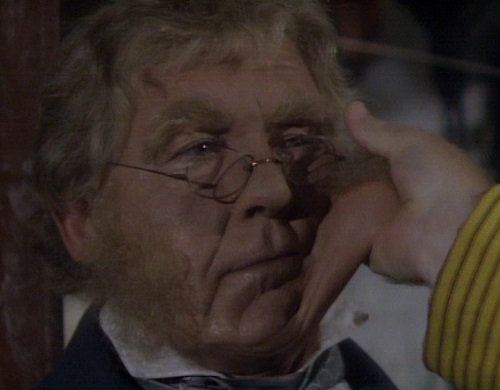
Joss Ackland stars as DogD'Artagnan, with BRIAN BLESSED backing him up (and stealing the show as often as not) as Porthos - superb casting - and the title characters are rounded off with John "Armageddon Factor" Woodvine as Aramis and Jeremy Young (a familiar face, but I'd be hard pressed to say what he's best known for) as Athos.

The most notable in the secondary cast are Edward "As you can see, the INTERNET is extremely complicated" Brayshaw as Rochefort, Nigel "Look Around You" Lambert as Planchet, Vernon Dobtcheff as a minor antagonist Monsignor de Gondy, and - during the episodes where the Musketeers are loling about the England of 1649 (this can be dated precisely due to the actual historical execution of King Charles i being a key plot point) - Geoffrey "Masters" Palmer as Oliver Cromwell, in a surprisingly nuanced (and almost sympathetic) portrayal, even though he is an antagonist to the royalist-supporting Musketeers.

I have no idea if the depiction of Cromwell was lifted from the novel since, although I have read a few of Dumas's novels (English translations, naturally, since translations into Cat are surprisingly hard to come by) including The Count of Monte Cristo and the Marie Antoinette romances, I haven't ever read any of his D'Artagnan stories. This means I can't judge the series' quality as an adaptation either - although you can pretty much tell that it must be an adaptation because the pacing and episode structure feels different to most stories written specifically for the format of a television serial. For example, despite being 16 half-hour parts, it fair flies by with constant twists and turns, but the most dramatic moments don't often line up with the climactic moments of individual episodes.

There's an unusual format point where each episode begins with a recap of the story so far that is delivered in-character by one or more of the main characters (often including D'Artagnan, but not always) addressing the audience directly, but in a conspiratorial fashion, as if letting us in on a secret. This is done in voice-over only, with still images of the characters as the only visuals, so I wonder if this was added after the main filming of the story was complete.


Loads of swashbuckling tropes are included, as you might expect, and a lot of swordplay - plenty of which occurs out on location, so this was no studio-bound production as might have been expected from the BBC in the 1960s. Some of the duels were really well done, inclusing several between our heroes and Brayshaw's villainous Rochefort (he's no Christopher Lee, but still very good in the part), but my favourite fight was between Porthos and Rochefort and didn't involve swords - Porthos used his fists and Rochefort used whatever props and bits of scenery he could get his hands on that BRIAN BLESSED hadn't already been chewing upon.

It was directed by Christopher "First Morbius Doctor" Barry so no wonder this was a polished production for its time. That said, there was still a lot of studio-based action, and at least one scene where a door needs to be broken down and the whole wall wobbles as it is struck, lol. Also a few fluffed lines, and I think I caught one bit where Ackland seemed to forget his line entirely for a moment. None of this detracted from my enjoyment - in fact I would say it added to it, since it is fun to watch these old series warts and all.

Monday, 12 August 2024

Big Gay Longcat reviews Doctor Who: The Trial of a Time Lord

Part


So Robert Holmes went
before he could finish his script for the final instalment of this fourteen-part epic. His protégé, script editor Eric Saward, finished it, but the producer John Nathan-Turner rejected this script because of the cliffhanger ending that Holmes and Saward had put in. It seems very likely this would have involved a crash-zoom to the Doctor's face, but we'll never know because it was never made. Instead JN-T turned to Pip and Jane Baker (the writers of parts nine to twelve) to write an alternative part fourteen with a happy ending, with the side effect that the plot crashed between two very different writing styles between the penultimate and ultimate episodes.

This is immediately obvious from the first moments of the final part - the Bakers, having no idea how Holmes and Saward intended to resolve the cliffhanger to part thirteen, had to make up a solution of their own. Glitz runs over and tries to save the Doctor from disappearing under the quicksand, but fails.

The Doctor then pops back up, perfectly alright again. The justification for this seems to be that this was an illusion, which is a dangerous precedent to set (for the viewers, if not the Doctor) because it means that it is harder for us to accept later threats to the Doctor as being genuine when the plot requires them to be.


The Valeyard appears to talk to the Doctor, all the while teleporting around like a second-rate Tim the Enchanter. He explains, in a roundabout, overly verbose kind of way, that he wants to kill the Doctor because this will free him of the good side of his personality. A cleverer writer would have made use of this motivation later on in the plot, by (for example) having the Doctor's conscience burden the Valeyard at a crucial moment and interfere with his evil plans, but the Bakers seem to have forgotten they introduced this trait for him by the time they wrote the climax.

The Valeyard vanishes and the Doctor and Glitz have to run away from "asphyxiating nerve gas." The Doctor claims
"This is in deadly earnest."
so apparently we are supposed to take this threat seriously. Glitz, like the viewer, cannot tell the real threats apart from the illusions. I can't blame him - this seems more than a little arbitrary to me.

The Doctor and Glitz make their way to a hut on the beach, which turns out to be the Master's TARDIS.


The Master hypno-eyeses the Doctor with a flashing light and some noises. He sends the Doctor out into the Victorian-era location of the Valeyard's "Fantasy Factory" base to act as bait. When the Valeyard comes out the Master attempts to pewpewpew him, but he has a forcefield that deflects the Master's pews. The Valeyard shouts at him
"You really are a second rate adversary."
and then returns fire by throwing explosive feathers at him. The Master and Glitz run away while the Valeyard does an evil lol.

The Doctor snaps out of his hypno-eyesed state when he hears Mel's voice. Mel takes the Doctor back to the trial room, where there is a subtle wrongness to the way Mel and the Inquisitor speak to him - staying too still, or pausing just slightly too long before speaking. This is either a very clever way of indication that this is all an illusion of the Matrix, or else yet another example of the director not being very good at his job.

They replay a short excerpt from the end of Terror of the Vervoids, which Mel says is an accurate depiction of what happened. The Inquisitor then finds the Doctor guilty of "genocide" and insists that
"Your life is therefore forfeit."


The camera then pulls back to show the Inquisitor and Mel watching the courtroom from another version of the courtroom. While this is easily the best twist of the episode, it is responsible for the many subsequent theories that this courtroom could be another illusory one in turn, and that therefore every adventure the Doctor has from this point on still takes place within the Matrix. Perhaps the Time Lords should have named their Matrix after a different film?

Mel takes the key to the Matrix from the Keeper and runs for the seventh door. The Doctor, meanwhile, is on an old cart being taken through the dimly lit Victorian streets by some Gallifreyan guards. It's a good thing we've already seen that this isn't real, or else this would have been a massive giveaway. The big question now is why the Doctor hasn't noticed yet, but of course he has and is only playing along. When Mel comes to 'save' the Doctor - with her most panto line-reading yet
"Never mind the Sydney Carton heroics, you're not signing on as a martyr yet."
the cart vanishes and he tumbles to the ground. Instead of being grateful for Mel's rescue, he is grumpy.

Back in his TARDIS, the Master attempts to hypno-eyes Glitz, and when that doesn't W-word he instead bribes Glitz with a large chest full of prop pirate treasure - it's super effective!

Now in the Valeyard's base, the Doctor and Mel search for clues. Mel opens the door to the waiting room, but instead of being teleported to a beach she instead sees a dragon who breathes fire at her. Naturally, this bit was my friend Dragon's favourite bit in the whole story, and I also enjoyed it for the odd way it foreshadows Mel's final story the following year.

Glitz captures Mr Popplewick and brings him into the room. Popplewick directs the Doctor and Mel to where "Mr J J Chambers" is to be found "across the courtyard." Once they have gone, Popplewick paws over the Matrix secrets to Glitz. He then attempts to shoot Glitz with a gun, but Glitz has already stolen the bullet. The Master arrives and points a gun of his own at Glitz, and takes him (still carrying the secrets) back to his TARDIS. This short scene of all these baddys double-crossing each other is almost too good to belong in this episode.


The Doctor pulls the Mr Popplewick disguise off to reveal he is really the Valeyard using an old-school mask like the Master used to back forward in the UNIT era.
"The performance was too grotesque to be real. I have never been able to resist a touch of the Grand Guignol."

Mel opens the Valeyard's cupboard to reveal
"A megabyte modem!"
With such power the Valeyard can connect to the internets! He will be unstoppable!

The Valeyard's plan is revealed. He wants to assassinate the Time Lords attending the Doctor's trial by firing a "particle disseminator" (a pewpewpew gun) through his modem to the courtroom. The Doctor sends Mel to warn them while the Valeyard does another evil lol.

In the courtroom the Time Lords are concerned with the news they've just heard, that "the High Council has been deposed." The Master attempts a coup by holding the Matrix hostage. He makes a speech that is somewhat reminiscent of his universal ultimatum from Logopolis:
"What I have to impart is of vital importance to all of you. Now that Gallifrey is collapsing into chaos, none of you will be needed. Your office will be abolished. Only I can impose order. I have control of the Matrix. To disregard my commands will be to invite summary execution."
His plan is then immediately defeated by the Valeyard because he booby-trapped the Matrix secrets that they stole, which now activates and hits the Master and Glitz with some kind of effect that makes them go all slow-motion and black and white. So it seems the Valeyard was correct to call the Master "a second rate adversary" since he can defeat the Master without even being there.


The Valeyard taunts the Doctor:
"There's nothing you can do to prevent the catharsis of spurious morality."
At least I think that's a taunt, I don't really know what it means, mew. I like the sound of the word "catharsis" though.

Mel bursts into the courtroom and warns them of the danger. The guards run away while the Time Lords, encumbered by their costumes, just have to duck as the Matrix TV screen explodes and lets some dangerous SFX into the room. The Doctor manages to break the Valeyard's modem - oh noes! How will he post his important opinions on who is best out of Blake and Tarrant now? The Doctor and the Valeyard run away from the "feedback" (the manifest form of a thousand angy cats telling him his opinions are this: wrong) but the Valeyard is caught by the SFX and pewed.


The Doctor escapes back to the trial room where he is presumably just as guilty of genocide as he was in the fake courtroom earlier.
Doctor: "Now, let me see, where were we? I was about to be sentenced, I believe?"
Inquisitor: "All charges against you are dismissed, Doctor."
Phew, thank goodness for Gallifreyan make-it-up-as-you-go-along Law! The Inquisitor also tells the Doctor that
"The young woman, Miss Perpugilliam Brown, is alive and well and living as a warrior queen with King Yrcanos."


This is not quite what the Master told her in the previous episode, which was that Peri had been made a queen by King Yrcanos - not that she was a warrior, nor that she was with Yrcanos. Though if he offered, I can't imagine her turning down BRIAN BLESSED, can you?

The Doctor suggests that the Inquisitor should stand to be the next President of the Time Lords, no doubt thinking her flexible attitude towards law and order makes her eminently qualified for the job. The Doctor and Mel then head off to the TARDIS for the traditional quick exit now that the story's over - except, of course, that Mel didn't arrive by TARDIS, and in fact the Doctor hasn't even met her yet.

You might think this impending temporal paradox might worry the Doctor, but he is more concerned with Mel putting him "back" on the exercise and diet plan we saw him on at the start of Terror of the Vervoids - though this isn't really "back" on it for him, since he won't have started it yet. Mew. The Doctor's last lines are him complaining about carrot juice. There's a good chance this is what brings on his next regeneration...

Back in the courtroom, the Keeper of the Matrix has also regenerated - into the Valeyard! He turns to camera and does an evil lol for our benefit. The Bakers snuck in a cliffhanger after all.


The considerable problems encountered by the production team when making The Trial of a Time Lord - not least the death of Robert Holmes and the resignation of Eric Saward - go a long way to explaining the problems that we viewers can see on screen when we watch it. But arguably the story was flawed from its conception, especially the "Christmas Future" segment which required much more careful pawing in order for it to make sense as part of the overall trial story.

The other segments were hardly free of issues - The Mysterious Planet had a glaring plot hole that betrayed the fact that Robert Holmes was no longer around to fix it in another draft, and Mindfuck suffered from the gaping flaw that we in the audience lost our connection to the Doctor's motivations for more than a whole episode, without even a satisfying payoff to justify it.

The story suffered throughout from mediocre direction and a lack of ambition in the smaller things that undercut what would otherwise have been the show's most ambitious story since the 1960s - as exemplified by the majestic opening model shot cutting to a dull beige interior set.

And yet, in spite of all its many flaws (and in some cases actually because of them, varoonik), The Trial of a Time Lord is a tremendously enjoyable story to watch - a colourful, fun, silly, messy romp; a pantomime across time and space, if you will. I mean, a story that contains both the lines
"I AM A MAN OF ACTION, NOT REASON!"
and
"Whoever's been dumped in there has been pulverised into fragments and sent floating into space, and in my book that's murder."
can hardly be all bad, can it?

It may be the longest (which ought to mean best) story the series ever attempted, but the decision to split it into four identifiable parts means it need never be a burdensome time commitment - one can dip into it for an episode or two and simply bask in whatever nonsense one sees unfolding on screen. In that respect the story it most closely resembles might be The Time Monster, only with a less good Master.

On the subject of the Master - the Valeyard ends up here becoming a much better Master than we have seen since the glory days of Roger Delgado - even being revealed as the Doctor's dark side, a long since abandoned possible origin for the Master. Michael Jayston does his best to make the character stand out, especially once he gets the chance to be out of the courtroom in the final two parts, but really the only reason he isn't the Master is so that we can have the twist where he turns out to be an evil Doctor. It's easy to see why the Valeyard never returned - the universe simply has no need for two characters who are both the hero's shadow, metaphorically or literally, or both.

I have made repeated reference to the make-it-up-as-they-go-along nature of Gallifreyan Law in these reviews. I think the reason this is so obvious - more so than in the other times the Doctor ended up being tried by the Time Lords - is due to the trial format and courtroom setup on this occasion being so close to that of a real British courtoom trial - judge, jury, prosecutor, defendant in the dock, prosecution evidence followed by defence evidence, witnesses, and so on. The result is an uncanny valley effect where the audience - familiar with real life courtroom procedure, if only from other TV shows - feels cheated when it then proceeds to make up its own rules, which wouldn't be the case if the trial was wholly alien from the very beginning. The trial at the end of The War Games being the purrfect example of the latter.

And given the central importance of the trial to the story - the clue is in the name - it is surprising to me that the makers did not get David Fisher in to be one of the writers. Fisher wrote for the series back during Tom Baker's era, but he also had considerable experience as a prolific writer for the 1970s TV series Crown Court - a show entirely concerned with courtroom trials. Why not at least get him involved for the structure and writing of the courtroom scenes?

We can see in The Trial of a Time Lord the forerunner of many of the tropes that would go on to be common in the 2005 revival series of Doctor Who. Most obviously, it is almost impossible to imagine the new series without some sort of overarching plot arc running across an entire season. But digging a little deeper, we can see more things in common - the arc being forced to intrude into stories that don't need its presence, making them worse than if they had been allowed to stand alone; the build up to a grand finale that is then written in a hurry so that it all unravels like a load of bollocks (I told him that was a mixed metaphor and he would insist -ed); and the chickening out of killing off Companions after saying they have been/will be. Even an insistence on spending the budget on impressive bits of SFX because the showrunner producer is embarassed by the show's reputation for being unable to compete with glossy American sci-fi can be traced to here.

At least in Trial of a Time Lord the Doctor acting out of character can be explained away as the Matrix lying to us.

Finally, I must say something about the controversy that surrounds The Trial of a Time Lord's cliffhangers. Contrary to poular belief, not every episode ends with a crash-zoom to the Doctor's face. In fact, only eight of the 14 episodes end in this way, which is only just more than half. Of course, of the other six, three feature close ups of the Doctor's face (four if we count the Valeyard as the Doctor) without a zoom, which means it feels like it happens more than it does. Only parts three and nine are completely free of this repeated phenomenon, so it is no wonder the story has the reputation it does, but there is actually more variety there than you might expect.

Monday, 15 April 2024

Big Gay Longcat reviews Doctor Who: The Trial of a Time Lord Part Eight

"Is Peri dead?"
"No."
So much for that cliffhanger. The Inquisitor once again stands in for the viewer when she asks
"Then what was the point of showing that last sequence?"
and when she then says
"I thought it was somewhat gratuitous."

The plot starts treading water (something we cats hate) with the Doctor and Crozier spouting more technobabble about Lord Kiv's brain transplant. Crozier wants to put the brain into another body, and is clearly eyeing up the Doctor (naughty Crozier!) which is just putting the plot back to the state it was in a couple of episodes ago.


Imprisoned with King Yrcanos, Peri says 
"I just want to be back in my own time with people I love."
This seems like it has come out of nowhere, and is a somewhat contrived way of starting the ensuing dialogue between them, but I think we can let the writer off in this case because Nicola Bryant and BRIAN BLESSED transcend the script with their performances.
Yrcanos: "WHAT IS THAT? LOVE?"
Peri: "Well, it's when you care for someone or something more than yourself, I guess."
Dorf: "More than yourself?"
Peri: "Well, I know it sounds crazy, but sometimes more than life."
Yrcanos: "I CARE NOTHING FOR MINE."
Peri: "How can you say that, Yrcanos?"
Yrcanos: "WELL, ON MY PLANET OF KRONTEP, WHEN WE DIE, OUR SPIRIT IS RETURNED TO LIFE TO BE BORN IN A MORE NOBLE WARRIOR."
Peri: "Until what? Where do you end after all your brave deaths?"
Yrcanos: "YOU BECOME A KING! ME, AFTER MY NEXT DEATH I JOIN THE OTHER KINGS ON VERDUNA, THE HOME OF THE GODS."
Peri: "To do what?"
Yrcanos: "WHY TO FIGHT! WHAT ELSE?"
Thank Hoff that BRIAN BLESSED is in this, the story would be so much less bearable without him.

Between scenes Crozier has had to rule out the Doctor - magnificent head or no - as a suitable body for Kiv, and wants to consider Peri instead. The Doctor tries to dissuade him with the most unconvincing counterargument:
"Peri? Ah, quite unsuitable. Female. Silly. Oh... flibbertigibbet. Hopeless."
Crozier sees through this and observes "you have strong feelings for the woman." He offers to let Peri off the hook if the Doctor can find a better candidate.

The Doctor is obviously behaving a lot more like his proper character than he was back in part six, considering that he is now showing any concern for Peri whatsoever, but the damage has been done and the question that hangs over all the Doctor's subsequent actions in this story is why he didn't do any of them sooner. Alas it's not a question we're ever going to get a satisfactory answer to.

The Doctor goes to rescue Yrcanos and Dorf. Yrcanos shouts made-up swearwords at the Doctor until he is let out and the guard captain put in the cell in his place.
"HIS NAME IS DORF AND YOU ARE SCUM."
"No, actually I am known as the Doctor, and there's no need to thank me for helping you to escape. Come along."

Kiv and Sil meet with some silly-looking squeaky aliens in a scene that only exists to give them something to do in this episode.


Yrcanos wants to know why the Doctor released him.
Doctor: "I need your help to defeat the Mentors."
Yrcanos: "THAT I UNDERSTAND, BUT YOU ARE MY SWORN ENEMY. I HAVE VOWED TO KILL YOU!"
Doctor: "Yes, yes, well, we can deal with all that later. At the moment, we need each other."
Dorf: "He has a point."
Yrcanos: "EVERYONE HAS A POINT, NOWADAYS. I AM A MAN OF ACTION, NOT REASON!"
LOL! This story has more than its fair share of problems, but it has to be said that that is a great line.

Once again the Doctor stops Yrcanos from running in and pewing all the baddys with his pewpewpew gun, the Doctor saying he doesn't want Yrcanos to cause "a bloodbath." This lends credence to my theory about why he warned the baddys about Yrcanos back in part six, and perhaps the Matrix merely distorted that scene to make it look like the Doctor suddenly decided to side with the baddys for no reason. Again, we'll never know the truth for certain, thanks to a combination of the Doctor's very convenient amnesia in the courtroom and a lack of any later explanations about which scenes the Matrix distorted and how exactly it changed them.
"YOU THINK LIKE A WARRIOR BUT YOU DO NOT ACT LIKE ONE, IT'S MOST PERPLEXING."
Insightful dialogue like this from Yrcanos hints at a much better version of this story that we could maybe have gotten, if only its script flaws had been ironed out before recording. Even as it is, it still shows a much better understanding of the Doctor's character than Steven Moffat would later manage, with rubbish like "To the people of the gamma forests, the word 'Doctor' means 'mighty warrior.'" Mew.

The Doctor and Yrcanos attempt a 'prisoner transfer from cell block 1138' plan to rescue the other prisoners, which leads into a komedy scene with an unnamed Mentor who is obsessed with everyone being quiet, and is therefore the polar opposite to Yrcanos.
Mentor: “Oh, thank you.”
Yrcanos: “FOR YOUR LIFE? IT WAS NOTHING.”
Mentor: “No, for not shouting.”
and then
Yrcanos: “VAROONIK! WE'LL RELEASE THE SLAVES, AND THEN ON TO DEATH! VAROONIK!"
Doctor: “I'm sorry about the noise. He does so enjoy his work."
Mentor: "Just go. Just go!"

There's a sudden, immediate change of tone as this punchline crashes into the following scene, where Crozier has Peri bound and gagged on an operating table.


In the chaos following the releasing of the slaves, the Doctor gets separated from Yrcanos and the other rebels. The TARDIS appears next to him in a white light, and he walks backwards into it as though hypno-eyesed. We then see the TARDIS travelling into the space station from the beginning of part one, a neat way of showing how this fits into the overall story's timeline as well as an excuse to reuse the expensive SFX once more.

In the courtroom the Inquisitor gives the exposition about how the High Council of the Time Lords ordered that the Doctor be taken "out of time" and the prevention of "the consequence of Crozier's experiment." In doing so she comes across as just as much of an antagonist as the Valeyard, not an impartial party, being fully aware of what the Matrix is about to show next. (How the Matrix can have recorded what happened next after both the Doctor and the TARDIS have been removed to the trial is not explained, and a writer who was paying attention to his own writing might have used that as a way of hinting that what we see next is not really real.)

Crozier does a proper mad scientist rant as he explains to Sil that he has copied the "contents" of Kiv's mind into Peri's body, without actually transplanting the brain. The question of why he didn't do this before is not asked, so we can only conclude that he only just thought of doing it since the start of the episode. Except that he then says that
"This is what I wanted to achieve from the very beginning."


Yrcanos is trapped in a time bubble by the Time Lords. In the courtroom, the Doctor challenges the High Council with interfering. Isn't that exactly what they are accusing him of? It's always projection with baddys, isn't it, mew?
Inquisitor: "They're caught in a time bubble. Everything must be perfect before they drive home their final attack."
Doctor: "You're using Yrcanos as an assassin."
Inquisitor: "It was judged by the High Council as the most acceptable way, and Yrcanos will never know that he was used."
Doctor: "And so they took it upon themselves to act like second-rate gods?"
All very dramatic, except... isn't this exactly what Yrcanos would have done anyway? And then the only reason for delaying Yrcanos's attack seems to have been to give Sil time to do the punchline about Kiv being in Peri's body:
"I wish you could have found a more attractive one."
This line comes at the end of an otherwise really dramatic scene that shows us Peri is dead and Kiv is in her body, well acted by Nicola Bryant (as Kiv) and Patrick Ryecart. Tonally the end of this episode is all over the place. Come to think of it, the rest of Mindfuck isn't exactly very tonally consistent either.

Yrcanos charges in and does a Big No. And when BRIAN BLESSED does a Big No, it's a really Big


"NO!"

He pewpewpews everyone in the room, although the screen fades to white before we actually see anyone get pewed, thus leaving it to our imaginations. This is way more restrained than the writer has been at any point in the story up until now.

In the courtroom, the Inquisitor and the Valeyard team up to try and blame the Doctor for forcing the Time Lords to interfere. The Doctor remains defiant:
"No, I was taken out of time for another reason, and I have every intention of finding out what it is!"
Despite the camera already showing the Doctor in close up, it crash-zooms to even closer up: cliffhanger!


The Mindfuck section of The Trial of a Time Lord is one of the most confusing of all Doctor Who stories, and the most baffling thing about it is why they decided to make it that way. To purposefully misdirect the audience is one thing, but when you do so you put an expectation in the viewers' minds that everything will be paid off and explained eventually - and this never does so.

Not only is a full explanation still withheld from us by the end of part eight, it won't even be forthcoming by the final end of the season. This is a breach of trust between the makers of the show and their audience, and it means that however many points these episodes might otherwise have in their favour they can never quite make up for this underlying shortfall.

The mind that is being fucked with in the title of this section of Trial of a Time Lord isn't the Doctor's, or Peri's, or even Kiv's... it's the viewer's.

Crash-zoom to face cliffhanger count: 6

Saturday, 6 April 2024

Big Gay Longcat reviews Doctor Who: The Trial of a Time Lord Part Seven


Peri saves the Doctor, who runs away so that Yrcanos is left behind with Peri, whom he picks up... not in that way, naughty reader!

In the courtroom, the Doctor is now claiming to have partial recall of the events instead of either total amnesia or fully remembering them:
"I can recall some of it. Bits of it are beginning to bob back into my mind."
The Valeyard speaks for all of us when he says 
The Doctor once again insists that the Matrix is not showing the truth, the whole truth and nothing but the truth. Or as he puts it:
"The events took place, but not quite as we've seen them."

Yrcanos, Eckerry Dorf and Peri team up and go looking for other resistance fighters to team up with, although Yrcanos is convinced that they will find him and then make him their leader.
"ROM BROM SAVALOONA. YES. YES. THEIR FOOTSTEPS ARE GUIDED TOWARDS ME. THAT IS THEIR DESTINY... AND MINE."
Peri pets Dorf as she discusses with Yrcanos his belief in destiny versus her belief in "blind chance." This is a nice, quiet scene (well, as quiet as any scene can be that has BRIAN BLESSED in it) that adds to our experience of all three characters, unlike the following scene where the Doctor assists Crozier in transplanting Lord Kiv's brain into a new body. This consists of the Doctor and Crozier shouting a lot of technobabble and meaningless numbers at each other, and a pointless fake-out that Kiv has died for a few seconds before it turns out he's alive really.

Crozier says that
"As from today, Doctor, I can put any brain in any body, anywhere."
but the story frames this advancement of medical science as though it were a bad thing, being as it is done by the baddys for the benefit of the baddys, and the Doctor looks sad at the news.


It's not all bad, however, because this scene does in fact include the best moment of the entire season, when Kiv goes into "cardiac arrest" and Crozier insists on finishing his cup of tea before moving to help him. This shows more clearly than any of his dialogue that Crozier is a mad scientist who is only interested in his research and discoveries, he is not the sort of doctor who cares about helping anybody.

Yrcanos, Peri and Dorf get captured by some rebels and soon team up with them. Yrcanos takes charge, just as he said he would, and there is even a pretty good comic moment:
Dorf: "I have seen him inspire disheartened rabble into acts of heroism."
Peri: "But how many of them survived, huh?"
Yrcanos: "AH, THAT'S A MINOR CONSIDERATION WHEN THERE IS GLORY TO BE HAD!"
This is turning out to be an episode with some wit, which is good because it helps disguise the fact that the plot is not really progressing much through these scenes. The rebels' previous leader says
"Alright, King Yrcanos of the Krontep, we'll fight."
to which Yrcanos replies
"VAROONIK!"

We soon get an example of Yrcanos's leadership in the field:
Rebel: "I'll scout ahead."
Yrcanos: "WE'LL ALL SCOUT AHEAD."
As they all charge forward as best they can in the cramped studio tunnels, he provides the template for all subsequent Klingons in the various Star Trek spinoff series:
"THIS IS A GREAT DAY FOR BATTLE. A GREAT DAY TO DIE!"
It's not just that one line (though it is the clincher), at other points he also rejects spying and ambush as tactics, and refuses to retreat even when that would be sensible. Yes, Star Trek took a lot from BRIAN BLESSED here. Perhaps they shouldn't have, mew?

Dorf manages to persuade Yrcanos to call off the attack, leading to a great line from the king that is both witty and characterful:
"YOU ARE A GREAT DOG OF WAR... I MEAN, A GREAT WARRIOR, WHOSE ADVICE I TRUST AND VALUE. OH VERY WELL, TODAY PRUDENCE SHALL BE OUR WATCHWORD. TOMORROW, I SHALL SOAK THE LAND IN BLOOD!"
It's too late, though, and the baddys spring an ambush on them.
They try to fight or, in Peri's case, to run away, and they all get pewpewpewed by the baddys.

This seems like a perfect place for the cliffhanger, but instead it goes back to the courtroom for one more short scene. The episode ends on an exchange between the Doctor and the Valeyard:
Doctor: "I am not responsible for that!"
Valeyard: "In your mind, perhaps not. But in reality it is somewhat different, Doctor."
It cuts back to the Doctor after the Valeyard's final word, and he is already in such a close up that there's no more room for a crash-zoom.


I suspect the director may have made a terrible mistaik here. This was probably supposed to be a crash-zoom-to-face cliffhanger, but it isn't.

Sunday, 31 March 2024

Big Gay Longcat reviews Doctor Who: The Trial of a Time Lord Part Six


BRIAN BLESSED saves the day when King Yrcanos goes on the rampage. He is careful not to hurt any of the mannys, but he does break a lot of things while shouting a lot. On his way out, he puts on his samurai-style helmet and seems to salute Sil.


"ROM BROM SSSSS. SABALOOMA."

I don't know what that means and neither, I suspect, does anybody else. The Doctor and Peri escape with him, and he tells them
"SORCERERS! EVIL DEMONS! SOUL STEALERS! THEY HAVE MY ECKERRY DORF IN A DUNGEON SOMEWHERE. WE MUST RELEASE HIM, OR DIE IN THE ATTEMPT! WERE YOU CAPTURED BY THE SLUGS WHO RULE THIS BALL OF MUD AND WATER?"
Peri does her best to get a word in, but she has no chance up against BRIAN BLESSED in full flow.
"WE MUST FIND SOME WEAPONS. SOME OF THOSE THAT TURN ONES' ENEMIES TO SLIME. WE MUST KILL ALL WHO STAND BETWEEN US AND VICTORY. WE'LL GRRRRRIND EVERY LAST SLUG BENEATH OUR FEET, YES?"
He picks her up at one point. Finally he gets around to introducing himself.
"RRRRRSSSSS! I AM YRCANOS, KING OF THE KRONTEP, LORD OF THE VINGTEN, CONQUEROR OF THE TONGKOMP EMPIRE! BUT YOU NO DOUBT KNOW THIS?"
He then has a little perv over Peri - a positively mild one by Sawardian standards - when he finds out she is not "PROMISED" to the Doctor.

In the courtroom, the Doctor admits that he cannot remember anything that happened after he was electriced. The Valeyard doesn't believe him, and says
"Then you're in for a surprise, aren't you, my dear Doctor? An exceedingly nasty one, if your memory is as fallible as you pretend."
The Doctor's laser-guided amnesia is a tired old trope, but it is necessary for the plot - if the Doctor cannot recall the actions of his past self, he cannot justify those actions to the court, which enables the writer to keep the past-Doctor's motivations unclear to the audience. Unfortunately, writer Philip Martin went too far and also kept those motivations secret from the actors, the rest of the production team, and possibly even himself.

Lord Kiv sets Sil to recapture the Doctor, telling him he only has one day and then he's off the case. Yrcanos takes the Doctor and Peri with him to try to rescue prisoners and steal weapons from the Mentors.
Peri: "That includes me, huh?"
Yrcanos: "ON MY PLANET OF KRONTEP, A WARRIOR QUEEN FIGHTS ALONGSIDE HER KING."
Peri: "We're not on your planet."
Yrcanos: "IT DOESN'T MATTER, THE RULE STILL APPLIES."
LOL. The Doctor warns the baddys of Yrcanos's attack, forcing Yrcanos and Peri to run away to avoid being captured - at least I think that's what happens, this scene is very confusingly directed. Peri attempts to pew Sil before running away, so all the mannys have to stand still so they don't get in the way of the special effect explosion going off.

The Doctor seeming to side with the baddys seems as out of character for him as anything since The Invasion of Time, but at least there we eventually got a full and satisfactory explanation of his actions. In the paws of a more skilled writer or script editor, the future-Doctor in the courtroom would have been able to explain his actions to the court (and thus the viewers at home) while his past self continued to act like a baddy. But we don't get that here, so the reason the Doctor teams up with Sil goes unexplained. His line to Sil
"I'm no hero."
feels like it should have been a nod and a wink to the audience that the Doctor is attempting "some trickery" (as Sil suspects), but it isn't played that way, nor is the courtroom Doctor able to claim that it was. Instead he tentatively puts it forward as a theory for his actions:
"No, there's something wrong. Of course! Sil was right! It was a ploy to fool the Mentors, yes... clever old me. Let the Matrix show what it will: a clever ploy. You'll see."
This scene also introduces the important concept to the plot that "the Matrix of Time cannot lie," a fact which all the Time Lords - the Doctor included, for now - accept as a self-evident truth.


Yrcanos meets the weredoggy and it turns out that he is the Eckerry Dorf that he mentioned earlier. He must have been Yrcanos's doggy, and Yrcanos is horrified that he has been turned part manny - a terrible fate for any doggy. Yrcanos rescues him and says
"WE WILL KILL THE SORCERERS. I SWEAR BY THE GREAT JEWELLED SWORD OF KRONTEP, YOU WILL BE REVENGED! COME."

Peri meets Matrona and gets a job W-wording for her. Oh noes! But even through a cunning disguise the Doctor recognises Peri straight away and denounces her. Again it is not made clear why the Doctor did this. Just as earlier he might have denounced Yrcanos to prevent a fight breaking out in which many mannys might have died, here he might have denounced Peri to save her from the terrible fate of doing W-word. But none of this is ever really clarified, so it looks as though the Doctor is just being a baddy for the lols.

In the courtroom, the Doctor claims
"I remember now. The ploy was to remove us both from the heart of the Mentor's control section. I gambled that after I'd helped them fix the cerebral transference unit, they might trust me to question Peri alone."
Valeyard: "To what end?"
Doctor: "Escape, I should imagine."
By saying "I should imagine" the Doctor gives away that he doesn't really remember what happened, he is just imagining what might have been his motivation for acting the way the Matrix showed.

Just when we think things are beginning to be cleared up, with the courtroom Doctor asserting that he was indeed only pretending to be a baddy, the scene where the past-Doctor interrogates Peri only confuses things further. He whispers to her that
"I'm your friend, you know that."
and
"I'm here to help you."
but then he appears to go on to interrogate her for real, even saying "Confess!" like he's a member of the Spanish Inquisition.

The courtroom Doctor asserts that
"It was never like that."
The Valeyard counters this by once again saying that "as we all know, the Matrix never lies," which the Inquisitor backs him up on. The Doctor quietly says
"I wonder."
as Colin Baker subtly shows the Doctor beginning to doubt this article of Time Lord faith. This is one of the better moments of the episode, and hints at a much better story than the one we're actually getting.

The Doctor and Peri are walking along with some of the Mentors' henchmannys when Yrcanos and Eckerry Dorf attack them. Yrcanos says
"NOW, DOCTOR, IT IS YOUR TURN TO DIE."


Crash zoom to the Doctor's face - cliffhanger!

This might have been a more effective crash-zoom-to-face cliffhanger if the light levels hadn't been so low, so that we could see the Doctor's expression better (although we know that it is just going to be the same "oh noes!" expression that Colin Baker uses for all his crash-zoom-to-face cliffhangers), and it's not often you'll hear me complain that the light levels are too low in 1980s Doctor Who. It's this messed-up story; it does things to your cat brain. No wonder this part of Trial of a Time Lord is known as Mindfuck, mew!

Crash-zoom to face cliffhanger count: 5

Sunday, 24 March 2024

Big Gay Longcat reviews Doctor Who: The Trial of a Time Lord Part Five


The spaceship model shot from the start of part one was obviously too expensive to only use once, so we see it again to open this second section of The Trial of a Time Lord. Just as the first four parts together were sometimes called by the name "The Mysterious Planet" (used as the title for the Target novelisation written by - who else? - Terrance Dicks), parts five to eight have the collective name "Mindfuck." We shall soon see why.

The Doctor is still calling the Valeyard "pathetic and juvenile" names, here "the Brickyard." The Inquisitor gets in a much wittier insult against both of them when she says
"Gentlemen, may I remind you this is a court of law, not a debating society for maladjusted, psychotic sociopaths."
The Valeyard calls the Inquisitor "Sagacity" which I think must be her first name.


Using the cutting-edge technology of its day (somebody in the BBC's SFX department must have recently had a birthday), the TARDIS materialises on a planet with a green sky, a pink sea, and a great big planet in the background. The Doctor and Peri have hardly come out when the Doctor in the courtroom objects to having to watch this "inconsequential silliness." I think the writer of the courtroom scenes didn't get on with the writer of the scenes set on the planet, because here they're basically accusing him of wasting our time with these inoffensive establishing shots. And the writer of the trial scenes is on very thin ice when accusing anybody else of wasting time!

Peri complains about having been perved on at the last planet they visited, by a "dirty old Warlord." It seems that, in a universe script-edited by Eric Saward, Peri can even get sexually harassed off screen and between stories. They go into a cave to look for signs of technologically advanced beings (e.g. cats) and within seconds Peri gets attacked by a monster. Trying to help her, the Doctor accidentally pews the monster with the pewpewpew gun he conveniently had in his paw.

The intrusions upon the action by the trial scenes have been a frequent source of irritation ever since part one, but for a nice change we get an interruption that adds something to the situation by allowing the Doctor to explicitly clarify that he pewed the monster by mistaik:
Valeyard: "Another death, Doctor?"
Doctor: "The seedy phaser discharged accidentally. Rerun the struggle, see for yourself."
Valeyard: "No need. There are clearer examples of your guilt to come."
With the production team feeling that their show was on trial just as much as the Doctor, this is obviously an attempt to clear themselves of charges that the character of the Doctor was becoming too violent, something that had been a problem in the previous season, with the 'acid bath' scene in Vengeance on Varos often singled out as one of the most egregious examples. The writer of said Vengeance on Varos was Philip Martin, who was also the writer of this episode, so we can maybe see why he felt the need to put in this disclaimer.

The Doctor and Peri get captured by some mannys, and the Doctor pretends to know the chief scientist here, a manny called Crozier. When the captain of the mannys (he isn't given a name, but he must be in charge because he's the only one with a speaking part) grows suspicious, they run away. Next they meet a weredoggy, who might be a manny that has been made up to look a bit like a doggy or could be a doggy that is being played by a manny. Confused cat is confused. The weredoggy is also confused, first trying to nom Peri but then asking her to help him. Peri describes him as "a Wolfman."


Not this Wolfman, sadly, or the Doctor and Peri could have solved the rest of this plot in about five minutes by getting him to help them with Wolf Power!

They see some aliens, one of whom is Sil. Sil is a returning alien from Vengeance on Varos, and is thus the first* returning baddy we have seen in Trial of a Time Lord. The Doctor acts like a massive yacht to Peri by not telling her that they were on Sil's home planet, and then he jokingly describes Sil as "your friend" - Philip Martin presumably missed the memo that the Doctor and Peri were supposed to like each other more in this season, and that the Doctor shouldn't be written in such a way as to make the audience hate him. These were both serious failings of earlier in Colin Baker's era, now in real danger of being repeated again here.

Things take a turn for the better when we see...


BRIAN BLESSED!

Audiences only familiar with BRIAN BLESSED's acting in sci-fi TV shows and films (including Space 1999, Flash Gordon, The Phantom Menace and, of course, Blakes 7) could be forgiven for thinking that he always gave the same sort of performance in everything he did - that being a larger than life, shouty performance; the embodiment of "DID SOMEBODY ORDER A LARGE HAM?!"

To think this would be to forget two of BRIAN BLESSED's three iconic, career-defining roles (the third being Prince Vultan in Flash Gordon, which... yes, does mostly fall into being exactly that sort of performance). The first of these was Augustus Caesar in I Claudius, where his acting had so much more depth than the line "IS THERE ANYBODY IN ROME WHO HAS NOT SLEPT WITH MY DAUGHTER?!" would suggest, culminating in one of the finest death scenes evar.

The second of BRIAN BLESSED's greatest performances was given in a TV series broadcast in the same year as Trial of a Time Lord, finishing less than a month before season 23 began on the BBC. This was ITV's John Silver's Return to Treasure Island, in which BRIAN BLESSED played Long John Silver as a boisterous, shouty manny, it's true, but one who was also capable of great subtlety, guile, and quiet menace when it was called for. Co-starring along with Christopher "Bellboy" Guard across all 10 parts of that series, if you watched it and then went straight into watching his episodes of Trial of a Time Lord you might well be left wondering what became of that BRIAN BLESSED.

As King Yrcanos, BRIAN BLESSED's first words are
"BLOOD! DEATH! TERROR! KILL! STREGONE!"
which I think tells us all we need to know about what we're in for (except, perhaps, why he speaks Italian). Yrcanos is attached to a machine by Crozier, played by Patrick Ryecart. Ryecart is a fine actor with a considerable range, having played everything from Romeo in the BBC's Romeo and Juliet to Captain Duff in The High Life. So in many ways he is too good to be in this rubbish, and like CHAAAAADBON in the earlier parts, his attempt at putting some character into his, er, character is doomed to suffer from the need to edit the story to fit in all the courtroom interruptions.

The machine is supposed to "pacify" Yrcanos, but instead it just makes him go a bit sleepy. Yrcanos calls Crozier "SCUM!" or possibly he is just sleepily misquoting the infamous "You rebel scum!" line from the then-recent film Return of the Jedi. BRIAN BLESSED being a big fan of Star Wars, as we know.

While Crozier and his mannys are away talking to Sil, and Sil's boss "Lord Kiv" (Christopher "Mike from The Young Ones" Ryan), the Doctor and Peri get into the laboratory and meet King Yrcanos. The Doctor is messing about with some buttons on the machine when Sil comes in and captures them. Crozier and Sil do not believe the Doctor when he tells them the monster attacked them, so Sil orders the Doctor to be put into the machine that King Yrcanos was in earlier. Crozier turns it on and the machine electrics him.


Crash-zoom to the Doctor's face: cliffhanger!

This is one of the better crash-zoom to face endings, since at least this time the action doesn't pause for long enough to give the camera time to dramatically zoom in while Colin Baker makes a face. On the other paw, the way it is framed, with the Doctor writhing in pain right into the cut to the end credits, makes this one of the nastiest and most violent cliffhangers we've seen for a while. Philip Martin definitely missed the memo about toning down the brutality after the criticisms of season 22.

Or who knows? Maybe this is fine.


Crash-zoom to face cliffhanger count: 4


* Because Drathro reusing some plot elements from The Krotons doesn't count, unless it turns out this means he is a Kroton really - if this fact was later confirmed in a Big Finish story or spinoff novel, please let me know in the comments so that I can have a good lol.

Sunday, 6 November 2016

Top 10 actors who should have played Number 2 in The Prisoner

Clickbait subtitle: Number 6 will make your jaw drop!


While obviously Paul Darrow would have made the best Number 2 evar, let's be sensible cats and confine ourselves to actors that could have plausibly been about in the era that The Prisoner was being made, and well known enough that they could have realistically been cast as the series' second main character for an episode or two.


Patrick Troughton could easily have made the list but for one thing, which is that he spent the whole of the period in question being in Doctor Who as a full time job. He just misses out on my top 10 for that reason.


#10. Kevin Stoney


Kevin Stoney is a good enough actor that he could be placed higher, but he is let down by his performance from that time he was actually in The Prisoner, as Colonel Jolly-Good-Show-What-What in Chimes of Big Ben - a character so broad in his English mannerisms that he could easily be best friends with Biggles or Bertie Wooster.

But imagine if Kevin Stoney had played his Number 2 more like his Tobias Vaughn in The Invasion (1968), then we'd be purring.


#9. Anthony Hopkins


Making this list mainly on the strength of his work in the Department S episode A Small War of Nerves (1970), plus of course all the hindsight of his subsequent career, Anthony Hopkins only places so low because of the feeling he'd be wasted as Number 2.

In the Prisoner episode Do Not Forsake Me Oh My Darling, Nigel Stock has a good go at playing Number 6 trapped in another manny's body, but despite a couple of strong scenes he can't rescue the rubbish production from itself. Now imagine Anthony Hopkins filling those shoes instead, and I think he may have had more chance than anybody else (except for a time-travelling 1980s Paul Darrow) of lifting that story up.


#8. Dennis Alaba Peters


Staying with Department S for inspiration, Dennis Alaba Peters played the regular authority figure Sir Curtis Seretse, and I think this could have been a good template for a take on Number 2.

He just needed to stay away from dodgy back projection when meeting with Stewart SullivanNumber 6 and he would have been fine. Sadly that was no easy feat in latter parts of the series, which is why he is no higher up this list.


#7. Herbert Lom


Herbert Lom was mainly a film actor, but did appear in a few TV shows, such as playing the main character in The Human Jungle (1963-64) and a guest star in The Man From UNCLE in 1967.

Despite looking a little bit like Kenneth Griffith (Number 2 in The Girl Who Was Death and, arguably, Fall Out), I don't doubt that you would have gotten a very different performance out of this veteran character actor, a few years before he got a bit typecast from playing Chief Inspector Dreyfus in the Pink Panther films.


#6. Philip Madoc


Going by his performance as the War Lord in The War Games (1969), Philip Madoc could have been a compelling, sinister, threatening Number 2, a worthy antagonist for Number 6 to face.

Contractually obligated joke:
"Why did you resign?"
"Don't tell him Pike!"


#5. BRIAN BLESSED


BRIAN BLESSED's versatility and range as an actor have been somewhat obscured by his post-Flash Gordon persona, but if you look at his work in the 1960s and '70s, such as guest appearances in The Avengers or his Augustus in I Claudius, you see what he would have been capable of as a Number 2.

Maybe his beard is Number 1?


#4. Honor Blackman


After leaving The Avengers to star in Goldfinger (1964), Honor Blackman could have returned to telefantasy television as a Number 2 who was the dark side of Cathy Gale or Pussy Galore.

Naturally as a cat I am bound to say I'd prefer the latter option.


#3. David McCallum


The Man From UNCLE series ended in 1968, so it is just possible that David McCallum could have come straight from there to be in The Prisoner, a few years before playing a prisoner himself in Colditz.

David McCallum is a truly great actor, so his Number 2 would have been bound to have been memorable in the first place, but there would also be the added question if, just as some speculated that Number 6 was really John Drake from Danger Man, could his Number 2 be Illya Kuryakin?


#2 Christopher Lee


In between making Dracula sequels for Hammer* Christopher Lee guest-starred in The Avengers episodes Never, Never Say Die (1967) and The Interrogators (1969), so it is not inconceivable that he could have been in The Prisoner around that same time. I think it's pretty uncontroversial to say he would have been a magnificent Number 2.

* This isn't even a joke: Dracula Prince of Darkness (1966); Dracula Has Risen From the Grave (1968); Taste the Blood of Dracula (1970).


So who is #1?


You are Number 6.


Only joking, it's:


#1. Roger Delgado


Roger Delgado's list of acting credits on IMDB for the 1960s show him as being stuck playing shifty foreigners called Von Golling (Danger Man, 1961), Rodriguez (The Saint, 1966) or Kreer (The Avengers, 1969), and many more examples both on film and on television. Inevitably they were minor villains, henchmen or, at best, guest villains of the week.

Aside from a recurring role as the Spanish Ambassador Mendoza in Sir Francis Drake in the early '60s, it took until his (perfect) casting as the Master in Doctor Who for him to find a regular part that showed off his acting skills to the best of his considerable abilities - although the Master was an alien, Delgado did not have to put on a dodgy accent or even more dodgy facepaint in order to play him.

I think it would have been great if we had seen a Number 2 played in the same vein, if only the producers of The Prisoner could have looked past the typecasting to the undoubted talent underneath. With all the qualities that made Roger Delgado's Master such a brilliant foil for Jon Pertwee's Doctor, Number 6 might have met his match at last.

It would have been even better if they had allowed him to record his own version of the opening dialogue (rather than lazily use the default sequence, as they tended to do towards the end of the series). That way we could have had:

"I am the new Number 2... and you will obey me."