Sunday, 6 November 2016

Top 10 actors who should have played Number 2 in The Prisoner

Clickbait subtitle: Number 6 will make your jaw drop!


While obviously Paul Darrow would have made the best Number 2 evar, let's be sensible cats and confine ourselves to actors that could have plausibly been about in the era that The Prisoner was being made, and well known enough that they could have realistically been cast as the series' second main character for an episode or two.


Patrick Troughton could easily have made the list but for one thing, which is that he spent the whole of the period in question being in Doctor Who as a full time job. He just misses out on my top 10 for that reason.


#10. Kevin Stoney


Kevin Stoney is a good enough actor that he could be placed higher, but he is let down by his performance from that time he was actually in The Prisoner, as Colonel Jolly-Good-Show-What-What in Chimes of Big Ben - a character so broad in his English mannerisms that he could easily be best friends with Biggles or Bertie Wooster.

But imagine if Kevin Stoney had played his Number 2 more like his Tobias Vaughn in The Invasion (1968), then we'd be purring.


#9. Anthony Hopkins


Making this list mainly on the strength of his work in the Department S episode A Small War of Nerves (1970), plus of course all the hindsight of his subsequent career, Anthony Hopkins only places so low because of the feeling he'd be wasted as Number 2.

In the Prisoner episode Do Not Forsake Me Oh My Darling, Nigel Stock has a good go at playing Number 6 trapped in another manny's body, but despite a couple of strong scenes he can't rescue the rubbish production from itself. Now imagine Anthony Hopkins filling those shoes instead, and I think he may have had more chance than anybody else (except for a time-travelling 1980s Paul Darrow) of lifting that story up.


#8. Dennis Alaba Peters


Staying with Department S for inspiration, Dennis Alaba Peters played the regular authority figure Sir Curtis Seretse, and I think this could have been a good template for a take on Number 2.

He just needed to stay away from dodgy back projection when meeting with Stewart SullivanNumber 6 and he would have been fine. Sadly that was no easy feat in latter parts of the series, which is why he is no higher up this list.


#7. Herbert Lom


Herbert Lom was mainly a film actor, but did appear in a few TV shows, such as playing the main character in The Human Jungle (1963-64) and a guest star in The Man From UNCLE in 1967.

Despite looking a little bit like Kenneth Griffith (Number 2 in The Girl Who Was Death and, arguably, Fall Out), I don't doubt that you would have gotten a very different performance out of this veteran character actor, a few years before he got a bit typecast from playing Chief Inspector Dreyfus in the Pink Panther films.


#6. Philip Madoc


Going by his performance as the War Lord in The War Games (1969), Philip Madoc could have been a compelling, sinister, threatening Number 2, a worthy antagonist for Number 6 to face.

Contractually obligated joke:
"Why did you resign?"
"Don't tell him Pike!"


#5. BRIAN BLESSED


BRIAN BLESSED's versatility and range as an actor have been somewhat obscured by his post-Flash Gordon persona, but if you look at his work in the 1960s and '70s, such as guest appearances in The Avengers or his Augustus in I Claudius, you see what he would have been capable of as a Number 2.

Maybe his beard is Number 1?


#4. Honor Blackman


After leaving The Avengers to star in Goldfinger (1964), Honor Blackman could have returned to telefantasy television as a Number 2 who was the dark side of Cathy Gale or Pussy Galore.

Naturally as a cat I am bound to say I'd prefer the latter option.


#3. David McCallum


The Man From UNCLE series ended in 1968, so it is just possible that David McCallum could have come straight from there to be in The Prisoner, a few years before playing a prisoner himself in Colditz.

David McCallum is a truly great actor, so his Number 2 would have been bound to have been memorable in the first place, but there would also be the added question if, just as some speculated that Number 6 was really John Drake from Danger Man, could his Number 2 be Illya Kuryakin?


#2 Christopher Lee


In between making Dracula sequels for Hammer* Christopher Lee guest-starred in The Avengers episodes Never, Never Say Die (1967) and The Interrogators (1969), so it is not inconceivable that he could have been in The Prisoner around that same time. I think it's pretty uncontroversial to say he would have been a magnificent Number 2.

* This isn't even a joke: Dracula Prince of Darkness (1966); Dracula Has Risen From the Grave (1968); Taste the Blood of Dracula (1970).


So who is #1?


You are Number 6.


Only joking, it's:


#1. Roger Delgado


Roger Delgado's list of acting credits on IMDB for the 1960s show him as being stuck playing shifty foreigners called Von Golling (Danger Man, 1961), Rodriguez (The Saint, 1966) or Kreer (The Avengers, 1969), and many more examples both on film and on television. Inevitably they were minor villains, henchmen or, at best, guest villains of the week.

Aside from a recurring role as the Spanish Ambassador Mendoza in Sir Francis Drake in the early '60s, it took until his (perfect) casting as the Master in Doctor Who for him to find a regular part that showed off his acting skills to the best of his considerable abilities - although the Master was an alien, Delgado did not have to put on a dodgy accent or even more dodgy facepaint in order to play him.

I think it would have been great if we had seen a Number 2 played in the same vein, if only the producers of The Prisoner could have looked past the typecasting to the undoubted talent underneath. With all the qualities that made Roger Delgado's Master such a brilliant foil for Jon Pertwee's Doctor, Number 6 might have met his match at last.

It would have been even better if they had allowed him to record his own version of the opening dialogue (rather than lazily use the default sequence, as they tended to do towards the end of the series). That way we could have had:

"I am the new Number 2... and you will obey me." 

Thursday, 20 October 2016

Duncan reviews The Power Game, Season One

The Power Game was a British political drama series that ran on ITV between 1965 and 1969, centering on the struggles between the three top men at a large (fictional) civil engineering company for control of the company and the wider political influence that comes with that power.

With a level of complexity to its intrigue that requires viewers to pay attention, and storylines that run across the whole of the first season's 13 episodes, this is the sort of series that US television wants us to believe that it invented about 15 years ago, but which really was already being produced as a matter of course in the UK going back 50 years.

Spoilers of this 50-year-old series follow.

In fact The Power Game is a sequel to another series, The Plane Makers, which I have not seen - yet - but which I do know contained several of the same characters, first of which is the main character of The Power Game, Sir John Wilder (played by Patrick Wymark), joint managing director of "Blighs" civil engineers, a man with a great deal of high level business experience and some political influence as well.

Wilder is the main character, but he is not a "good guy" - he's greedy, ruthless, and only out for himself. He also proves to be a complete hypocrite in his personal life, jealous of his wife while keeping a mistress of his own. He's a thoroughly unlikable character, and it is a tribute to the acting skills of Patrick Wymark when he manages to get the viewers to side with him.

The second main character is Caswell Bligh, played by Clifford Evans - he may have been Number 2 in the worst episode of The Prisoner, but he wasn't the worst Number 2, and here he gets to show off the skills he was denied by being in Do Not Forsake Me Oh My Darling. Bligh, the founder of "Blighs", is in some ways a more sympathetic character than Wilder - while just as unscrupulous in his business dealings, Bligh is a family man whose ambition is to leave the company he built up to his son and grandson after him (Wilder, by contrast, definitely only wants money and power for himself). There is a darker side there though - it is revealed during the series that Bligh made his fortune during the second world war by skimming profits from contracts that were supposed to be part of the war effort.

The final member of the trio that make up the primary tier of characters is Caswell Bligh's son, Kenneth Bligh. Kenneth (always referred to as Kenneth in the show, not Bligh or Mr Bligh, to avoid confusion with his father) is played by Peter Barkworth, an actor who was in many things but whom I probably most associate with either Leader Clent in Doctor Who's Ice Warriors or else Martin Hewitt in two stories of The Rivals of Sherlock Holmes. Supposedly Kenneth is in his mid-thirties, and while Barkworth was about that age at the time, I find this hard to swallow because he definitely looks older.

So the basic setup is that Bligh (Senior) wants to pass on control of his company to his son, but feels he is not ready yet, so makes him joint managing director with another man until he is ready. Sir John Wilder wasn't Bligh's first choice but Wilder forces his hand in the first episode, coming out of the semi-retirement he ended The Plane Makers in and with a lot more powers than the Blighs are happy with.

Around these three are a second tier of regular characters. Jack Watling (Professor Travers in Doctor Who) plays Don Henderson, another character returning from The Plane Makers to be Wilder's right hand man. He often serves the role that Bernard Wooley served in Yes Minister, with the other characters explaining their deep plots to him and, by proxy, the viewers at home.

Lady Pamela Wilder (Barbara Murray) is Wilder's wife. Susan Weldon (Rosemary Leach) is Wilder's mistress. One of the most impressive things about the series is how unsexist it is for the time in which it was made - let's not forget that even the progressive Star Trek was incredibly sexist in the 1960s - and would even stand up well against some series being made today. They are two of the cleverest characters in the series, but Lady Wilder does not work and Miss Weldon is merely the assistant secretary to a civil service board - despite having a PhD in Economics - because they are unsexist characters who exist in a sexist time.

These then are the characters who appear in almost every episode. There is a third tier of regular characters who recur across a few. Rachel Herbert as Justine Bligh (Kenneth's wife) is perhaps the most worthy of mention for being the other Number 2 to appear in the show. Sorry if that's a spoiler for Free For All, by the way.


Who is Number 1?

George Sewell (Alec Freeman in UFO, or the Superintendent from The Detectives if you prefer) plays Frank Hagadan, employed by Wilder as an engineer and then sacked by him when he discovers Hagadan is his wife's lover. This makes for one of the best moments of the season, when we see that Pamela Wilder didn't love Hagadan at all, she was just using him to get back at her husband for his own infidelity - a twist conveyed by Barbara Murray with only a single look to camera.

Philip Madoc (who I trust needs no introduction) plays a trade union official and member of the National Export Board - as are Wilder and Bligh. He plays them off against each other when it becomes clear that they should not both be on the board when they work for the same company (Wilder was appointed to it before he took the Blighs job), and the main plot of several episodes hinges on this development with first one, then the other, threatened with losing their place and, with it, a good deal of their political influence. Probably my favourite moment of the season comes when it looks like Bligh has been forced, by one of Wilder's many schemes, to resign from the board, but at the last minute he is saved by an intervention from the Minister that neither of them foresaw while at the same time having been foreshadowed, to us, beautifully.

The last regular I feel is worth mentioning is Ian Holm, here near the beginning of his career that would go on to include such highlights as Ash in Alien, Pod in The Borrowers and, of course, The Lord of the Rings where he played Frodo Baggins. Here he is the closest thing to a real "bad guy" antagonist, the ambitious civil servant Sefton Kemp.

Kemp is the secretary to the National Export Board and, as such, is Miss Weldon's boss. After failing to get rid of her - which he wants to do because she is actually better qualified for his job than he is - he plots with the chairman of the Board to get rid of Wilder as part of a play that will expand the powers of the Board. This forms the finale of The Power Game's first season, a superb climax that sees everyone turned against Sir John Wilder and, by the end of part two (Network leaving the ad breaks in on their DVDs again - I like it when they do that) he's as up against it as he's ever been. Suffice to say that before the end credits roll he turns it around and it is Kemp that ends up getting sacked, and Wilder comes out with more power than ever before.

Well, by going through the characters in this way I have also covered all the features of the series that I felt were worth discussing, so that's it for my review really. In conclusion, while this might seem like a TV series consisting largely of men shouting at each other in rooms... actually, I'm not going to deny it is that. But it manages to make that into totally gripping drama. Even The Sandbaggers, behind its office-bound setting, had the advantage of being about the inherently more exciting subject of espionage, but The Power Game makes more with less.

I would unhesitatingly give the first season of The Power Game a ***** rating.

Tuesday, 9 August 2016

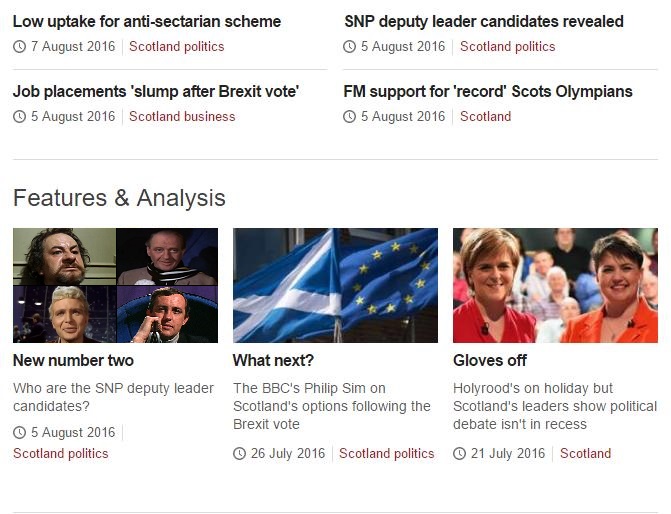
New Number Two

Local politics is getting interesting here in our Village, as this screenshot from the BBC's News website today shows:

Tuesday, 2 August 2016

Quenta Sil-MEME-illion

A Cellar Full of Silence


A Cellar Full of Silence is the second of Terry Nation's fabulous episodes of Department S. It is a great mystery that our three heroes peel back the layers of bit by bit, ever advancing towards the dramatic climax where there is a countdown to a bomb going off! Truly El Tel is the master of writing telefantasy mystery stories, every one is so different and you never know what is going to happen next.

The main guest star of the week is Edward Brayshaw, in this the same year as he was in Doctor Who's The War Games. But here he is the main baddy, acting behind the scenes and hardly seen for most of the story until it is time for him to make his move - so more like the War Lord than the character he did play, the War Chief.

If ever there was an actor who was born to play the baddy in telefantasy programmes, it is Roger Delgado. But Edward Brayshaw must be a pretty close second.

I give this episode 5 out of 5, and not just for the pre-titles scene where extras are working topless on a building site for no reason. Honest. Mew.

Monday, 11 July 2016

Mission: Impossible - The Brexit, part six


"Jim, there's trouble."


"What's wrong, Cinnamon?"


"The government have printed a propaganda booklet in favor of Remain and mailed it to every voter in the country."


"Surely you can't be serious? Simple reverse psychology tells us this would give a big boost to the Leave side, as voters feel they're being told what to do and vote the other way out of sheer stubbornness."


"I am serious, and don't call me Shirley. The problem is not with the ordinary voters, who are backing 'Vote Leave' in droves, it is with the politicians - they're believing their own propaganda, and so now every mainstream political Party is officially in favor of Remain. And because the referendum is..."


"...Because the referendum is only advisory, they could vote against it in their parliament. I see. That means we'll have to take steps to make sure there's a majority for Leave in the House of Commons. Fortunately for us, their First Past the Post system has given the Conservative Party an overall majority, so we only need to convince them."


"How can we do that Jim? We know that Prime Minister Cameron, Chancellor Osborne, and most of the other senior Conservatives all want 'Vote Remain' to win."


"That's true, Willy, but you're forgetting one thing - a vote in parliament would only take place after the referendum saw a majority vote for Leave. So we don't need to convince them now, we just need to ensure that whoever is leader of the Conservatives after the referendum is someone that will carry out the will of the people.
Willy, Cameron will have to go immediately - take care of him, er, it.
Cinnamon, I think ensuring the right person takes his place may be a job for 'Ms Leadsom' - just make sure you don't find yourself in the hot seat when the music stops."


"Yes Jim. But Jim, what about the Labour Party? As the official opposition, couldn't they rally support and block the vote in the Houses of Parliament?"


"I don't think we need to worry about the Labour Party somehow, Cinnamon..."


Meanwhile, at Labour Party Headquarters...


"Jeremy... I mean Comrade Corbyn... I have seen reports in the newspapers that you're not fully behind us in backing 'Vote Remain'. Tell me this isn't true, please."


"Do not believe the lies of the capitalist press, Comrade Burnham. I am fully in favor of our country remaining part of the European Union. Well, ninety percent in favor... seventy... call it fifty-five percent in favor, which is still more for than against it, no?
Besides which, haven't I been up and down the country making speeches in support of our comrades in the European Union? The press must have given them at least some coverage?"


"There's nothing about that here."


"Oh well, ask Comrade Eagle if you don't want to take my word for it."


"Trapped between betraying our socialist principles on the one hand... electoral oblivion on the other... I don't believe in the no-win scenario. There has to be... a third way. Exceptnotthatkindofthirdway. Perhaps... yes, perhaps I could become a mayor... a mayor like Sadiq

...but that's another story.