Friday, 28 May 2021

Big Gay Longcat reviews Doctor Who: The Sea Devils Episode Five


Back at the naval base, Walker the "Parliamentary Private Secretary" (who is disappointingly not played by Chuck Norris) arrives and starts ordering the remaining mannys around, although mainly he wants them to give him some noms. This is a short komedy scene before we get to the important meeting between the Doctor and the Sea Devils.

It is something of a retread of the dialogue between the Doctor and the main Silurian Jurassic characters in Doctor Who and the Jurassics, even down to the similarity of the line
"This is our planet. My people ruled the Earth when man was only an ape."
to
"This is our planet, we were here before man."
and again the Doctor tries to persuade them to "share the planet" and live in peace with mannys. The Doctor obviously sees this is a second chance to succeed where previously he failed to ensure peace between the two non-felis terrestrial races.


Only this time the Master is here to get in his way.

Walker meets with Captain Hart and Jo, and tells them
"Now, I've had a look at that UNIT file about the creatures that your friend the Doctor encountered in those caves. And do you know what happened? Brigadier Lethbridge-Stewart blew the whole lot up."
The UNIT era made several attempts to predict what the near future might be like, and they almost got this one right, except that here a DVD is called a "file" instead. Walker wants to follow the Brigadier's example (he must be a fan) so he has ordered more ships to come so that they can blow up the Sea Devils.


We see lots of stock footage of ships sailing about, readying their torpedoes and firing their guns to show us the "task force" assembling and then going into action at Walker's order.

The Sea Devils are about to agree to the Doctor's request that they release the submarine "as a gesture of good faith" when the explosions reach them and make the camera shake. This makes the Sea Devils change their minds and side with the Master almost as quickly as the Master changed his mind and sided with the Doctor at the end of Terror of the Autons. Without giving him even the tiniest chance to arrange a "truce" they order the Doctor to be killed, but another explosion allows him to escape.

The Master convinces the Sea Devil leader not to fight back against the navy right now, so that the mannys think they have won and go away.

The Doctor rescues Donald Sumpter and his best first mate from their cell by pewing the door open with a stolen pewpewpew gun, then they go to the submarine to rescue the rest of the submacrewmannys and liberate it.


The Sea Devils put a "force field" in the way of the submarine as it tries to escape. The Doctor suggests to Sumpter that they blast their way free using torpedoes, because he is fine with using weapons on inanimate objects.

They get back to the naval base, and the Doctor asks
"Captain Hart, what idiot ordered an all out attack just as I was on the verge of finding a peaceful solution?"
just as Walker enters the room, lol. The Doctor knows he's an idiot and he hasn't even met him yet. Walker the Idiot says
"Our duty is to destroy the Queen's enemies. Don't you know your national anthem? 'Confound their politics, frustrate their knavish tricks.'"
Sadly the Doctor doesn't reply by paraphrasing Steel with 'I know my national anthem,' but he does put Walker in his place with
"That, sir, is an extremely insular point of view."

Walker is under the mistaiken impression that they have won, but the Doctor corrects him. Just as the Master got Trenchard on his side by appealing to his patriotism and sense of duty, the Doctor recognises Walker's weakness and appeals to his ego and sense of vanity:
"Wouldn't you like to be the man behind a peaceful settlement? 'Walker the peacemaker' they'd call you. Or would you prefer to be known as the man responsible for launching a full scale war?"
This is enough to get Walker to allow the Doctor one more attempt at making peace, and he sets out. The trouble is that the Sea Devils are even at this moment attacking the base, and as soon as the Doctor, Jo and Captain Hart get out onto location they encounter a Sea Devil, who points its pewpewpew gun at them - cliffhanger!

Thursday, 27 May 2021

Big Gay Longcat reviews Doctor Who: The Sea Devils Episode Four


'I am not a number, I am a Sea Devil!'

Faced with a choice between the mannys with guns and the Sea Devil with, er, a gun, the Doctor picks the third option and he and Jo try to escape by way of the minefield. Since it can't immediately get at the Doctor, the Sea Devil starts pewpewpewing the mannys instead.

The Doctor uses the sonic screwdriver as a mine detector so that they can avoid being blowed up. Then when the Sea Devil runs out of mannys to pew and starts to follow them, he also uses the sonic screwdriver to detonate the mines that are near to it.


This seems very convenient to me, yet it has gone down as one of the most iconic uses of the sonic screwdriver of all time, so it seems that Doctor Who fandom as a whole is prepared to let it pass. Maybe it only seems so bad to me because of all the many, many subsequent and even more tenuous uses the screwdriver will be put to, in both the old and new series?

The Sea Devil doesn't like nearly getting blowed up, so it runs away and allows the Doctor and Jo to escape... very slowly and carefully.

On the bridge of the submarine, Donald Sumpter and his mannys prepare to defend themselves against the Sea Devils doing a classic slow cutting through their door, but when they see it is a Sea Devil they are too surprised to shoot it. The next time we see them they have all been captured and are being made to drive the submarine somewhere under the direction of the Sea Devils.

The Doctor and Jo make it back to the naval base and talk to Captain Hart, but he doesn't believe them:
"The Doctor's seen these creatures before."
"Oh, I'm quite sure he has, Miss Grant."
Captain Hart did a sarcasm, lol, but if there is any character in this story who has been seeing things that aren't there then I would suggest it's the manny with half a decanter of booze sat on his desk:


I'm not sure Captain Hart is dealing with everything that has happened as well as he wants us to believe. The Doctor appears to agree with me, saying
"Captain Hart, you are dealing with a situation completely outside of your own experience. And if you won't let me help you..."

The Master is now able to use his device as a telephone with which to contact the Sea Devils. Trenchard catches him using it, and the Master tries to bluff him that their message to him is only "random feedback" but Trenchard is clever enough to see through this and it is enough to finally make him want to contact "the authorities" about what has been going on.

Unfortunately he is unable to raise the alarm because the Minister is too busy to take his telephone call, even though Trenchard is the manny in charge of guarding the most dangerous criminal in the world. I think this is a bit of satirical commentary on government bureaucracy from the story's writer Malcolm Hulke that we're seeing here - Hulke smash the state!

Sea Devils enter the prison and pewpewpew the mannys there. Trenchard shoots at one of them himself, but then the camera cuts to the Master's room. The Sea Devils enter and we see Trenchard go

Captain Hart's radar manny has detected something heading for the castle-prison, and this is enough for Hart to want to investigate in case it is the missing submarine. He takes the Doctor and Jo with him, and when they get to the prison they find Trenchard and all his mannys ded and the Master and Sea Devils gone.

The radar manny detects the submarine again, heading for the fort this time, so the Doctor, Jo and Captain Hart also go there in a ship. They lower the Doctor into the water inside a small portable room that is in no way bigger on the inside. When he reaches the bottom of the sea, he sees a Sea Devil's face out the window, and it peers in at him with a big googly eye. 


Then Captain Hart loses contact with the Doctor so he orders the room to be taken back up. When it is back on the ship, Captain Hart and Jo look inside, but it is empty. The Doctor has been kittennapped offscreen since we last saw him - cliffhanger!

Wednesday, 26 May 2021

Big Gay Longcat reviews Doctor Who: The Sea Devils Episode Three


The whole of the swordfight is shown again, which is fine by me because it is great. This time we see that the knife misses the Doctor, and then Trenchard and another henchmanny with a gun come in and capture the Doctor. Other henchmannys try to capture Jo outside, but she gets away from them and escapes onto location.

Now that their situation has reversed and the Doctor is his prisoner, the Master has a bit of a gloat and then tells him his plan to contact the Sea Devils:
"Those reptiles, Doctor, were once the rulers of this Earth. And with my help, they can be so again."


Captain Hart hasn't heard back from the Doctor and Jo yet, and he decides to get on with the missing ships plot without them. To do this he sends a submarine commanded by Donald Sumpter to investigate the triangle.

The Master talks with Trenchard some more, and we learn that Trenchard isn't really a baddy, but has been fooled by the Master into thinking that helping him is doing the right thing.
"Just doing my duty."
he says, which puts him in the same category of baddy as General "moral duty" Carrington from The Ambassadors OF DEATH.

Jo finds an unbarred window and sneaks in to the part of the prison that is also on film, and from there gets into the studio set where they're holding the Doctor and helps him to escape.


Now you're probably expecting me to use the "it's only a model" "shhh" gif at this point, but in actual fact the BBC had the cooperation of the Royal Navy in the making of this story, so this is really a real submarine!

The submarine loses power (which is probably for the best) and sinks to the bottom of the sea. The mannys inside the submarine hear a clanging coming from outside, as though somebody is saying "The Sea Devils" over and over again. For a story with as much padding as this one has, this scene feels surprisingly rushed, when a slower ratcheting up of the tension might have been more effective. On the other paw, none of the mannys on board are main characters so it would have been difficult to sustain the viewers' interest in their fate for very long instead of going back to the Doctor and Jo, or the Master, who are the ones we are really watching the show for (especially the Master, purr). Still, the actors here do their best as the submarine is attacked by Sea Devils and Sumpter hears his submacrewmannys screaming over the intercom, followed by a blast of incidental music, followed by silence.


The Master hears from Trenchard that the Doctor and Jo have been spotted escaping towards the beach, so he switches on the device he has been building with the parts stolen from the naval base.

On the beach, Trenchard's mannys drive up to the Doctor and Jo in a small white vehicle to try to recapture them. Now what does that remind me of?

Summoned by the Master's machine, a Sea Devil rises out of the sea, so the Doctor and Jo are trapped between mannys with guns, a minefield, and a Sea Devil. Cliffhanger!

Tuesday, 25 May 2021

Big Gay Longcat reviews Doctor Who: The Sea Devils Episode Two

There's hardly any recap of part one shown at all, and this is because the remaining manny comes in and recaps what has happened at the fort for the benefit of the Doctor, Jo, and us:
"He's dead! They killed him! Came from the sea! The sea! A Sea Devil!"
This is almost a clang! except he used the singular instead of the plural.


There is a Sea Devil there, we see it follow them out of the room. The Silurians spent a lot more time in their story unseen or as POV monsters than the Sea Devils have done - almost three whole episodes out of seven, as opposed to less than one here.

The Doctor meets the Sea Devil and it pewpewpews at him, but misses so the Doctor runs away. He gets back to the room with Jo and the manny (who is now having sleeps) and barricades the door, but says to Jo
"Those creatures can cut through anything. Rock... metal... anything!"


It seems he is right as the Sea Devil begins a classic slow cutting through the door. When it puts its paw through the hole the Doctor electrics it and it runs away. The Doctor and Jo turn the tables and start chasing it, but it gets away by jumping out of a window like Hitler escaping from Danger 5.

The Sea Devil has stolen the fort's telephone so the Doctor tries to make one out of a radio. His first attempt fails, leading to a komedy moment that entirely fails to be either as charming or as funny as the Master's little scene of watching Clangers was in the preceding episode.

The writer of this story was Malcolm Hulke, who also wrote Doctor Who and the Silurians, and he obviously wanted to connect the two because there follows a scene where the Doctor gives Jo some exposition about the earlier story:
"Those things that attacked us. You said you'd seen something like it before?"
"Something very similar, certainly. They emerged from some caves in Derbyshire."
"The Silurians, wasn't it? The Brigadier was telling me."
"That's a complete misnomer. The chap who discovered them must have got the Period wrong. No, properly speaking, they should have been called the Eocenes."
"That was that race of super reptiles that had been in hibernation for billions of years, wasn't it?"
"That's right, and if you want my opinion, there's another of their colonies right here beneath us."

Right... so... where do I begin? Dr Quinn dated the Silurians to 200 million years ago, which would put them in the Jurassic Park Period, not the Silurian (445-415 million years ago) nor the Eocene (56-34 million years ago). As for Jo's "in hibernation for billions of years," well, she did at least admit to failing her level in science, I wonder how many attempts the Doctor took to pass his?

The Doctor eventually gets the radio-telephone going, and manages to contact one of the poshest mannys to have ever been in Doctor Who to get him to come and rescue them. They are taken back to Captain Hart, who still doesn't believe them:
"How can I go to the admiralty with a story like that? Sea Devils? If only you had some proof!"
Clang!


Trenchard also visits H.M.S Seaspite, along with the Master, who is in disguise as a naval officer. He steals some equipment from the base, but is spotted from a window by Jo. By the time the alarm is raised, the Master and Trenchard are already away.

The Doctor and Jo go back to the prison, where Trenchard shows them the Master is (back) in his room, but they are still suspicious so the Doctor sends Jo to contact the Brigadier (the real one, as opposed to his frankly useless substitute, Captain Hart) while he goes to confront the Master.

When the Master hears that the Doctor knows what he has done he pulls a gun on him. The Doctor Venusian Karates the gun out of the Master's paw so he then grabs a sword which just happens to be on the wall in the corridor outside his prison cell. I'm sure it is perfectly standard for the corridors of maximum security prisons to be decorated in this fashion, mew.
The Doctor says
"Like that, is it?"
and gets a sword of his own.


This is a wonderful scene, and the Doctor certainly seems to enjoy it, although the Master looks angry throughout much of it - perhaps this is because the Doctor has him outclassed, to the extent that he even takes the time out to nom a sandwich in the middle of the fight. But it is over all too quickly - even the Doctor seems to think so because when he wins he purposefully makes the fight longer when he gives the Master a second chance.

The Doctor wins the swordfight (again), but then the Master has the knife that we saw him take earlier at the same time as the gun, and he throws it - straight into the cliffhanger!

Monday, 24 May 2021

Big Gay Longcat reviews Doctor Who: The Sea Devils Episode One

The Sea Devils is the third story of season nine of Doctor Who, and was first broadcast in 1972. It stars Jon Pertwee as the Doctor, Katy Manning as Jo Grant, and Roger Delgado as the Master. It is the third of the Pertwee Six-Parters.

It starts with a sailor manny trying to send a Mayday signal, but A View to a Kill won't be made until 1985. He then tries to send an SOS but Abba won't release that song until 1975. He gets cut off by the sting of the incidental music, and then a POV monster advances upon him until the camera fades to black... which could refer to a number of films or songs, none of which had been made by 1972.

The Doctor and Jo are also in a boat, off to visit the Master in his "permanent residence from now on" which is a big castle. They are let in by Colonel Trenchard, and as they talk to him about "wanting to see the prisoner" I can't help but think it would have been more effective to keep the revelation that "the prisoner" in question is the Master back a bit for a surprise reveal. Either that or the Doctor and Jo should have sat down to watch an episode of The Prisoner on Trenchard's TV set - although I expect seeing Doctor Who characters watching a different TV show would have been a bit too postmodern for 1972, mew...


Instead Trenchard shows them the Master trying and failing to hypno-eyes a manny.

He takes them in to see the Master, and the three of them start gossiping about Trenchard behind his back as soon as he leaves the room:
"He's quite a decent sort, really. Used to be the governor of a colony once, so he tells me."
"Very small colony, wasn't it? In fact, I believe they claimed independence soon after he arrived."
That definitely sounds like the sort of manny you'd give the job of guarding the world's most dangerous criminal to, mew. But as the general who appointed him to the position put it: 'I must obey.'
It makes me wonder which colony Trenchard could have been the governor of, and I think the most plausible explanation is that he was the Governor of Northern Ireland in the Doctor Who universe. The Doctor asks the Master where his TARDIS is and the Master refuses to tell him, believing (possibly correctly) that the Doctor would use it to escape Earth, although the Doctor claims it is only to ensure that the Master cannot escape.

As the Doctor and Jo turn to leave, the Master asks the Doctor to visit him again for a chat. It leads me to ponder the direction not taken here, how interesting it could have been if the Master had remained as a prisoner to be consulted by the Doctor whenever he needed help with a particularly difficult alien invasion or crazed computer, in the style of Hannibal Lecter. It could also have been fun for us to see the Master's many escape attempts. 'I am not a number, I am the Master and you will obey me!'
I suppose it could only have made thematic sense for as long as the Doctor was also a 'prisoner' of a sort due to his Time Lord-imposed exile, and I know that will not last for many more stories beyond this one.

The Doctor almost shakes the Master's paw but stops himself at the last moment, and we will have to wait all the way until Logopolis before we will finally see a manly handshake between the two.


After they have gone the Master lols. This is because, as we see only when the Doctor and Jo have left the castle-prison completely, Trenchard is really his henchmanny. The Master is investigating a missing ships plot - the one foreshadowed by the first scene - and he asks Trenchard about getting some "admiralty charts."

The Doctor is also trying to get in on this plot, asking a manny about it and thus finding out about a nearby naval base, which he knows must be significant due to the law of conservation of narrative detail. The Doctor then bribes the manny to let him take his boat to...


H.M.S Seaspite (thanks convenient establishing shot), where Captain Hart sees him arriving and telephones for the "Master-at-Arms" (that this is not a cunning alias being used by the Master is, I make it, the third missed opportunity of the story so far). Captain Hart's mannys then capture the Doctor.


The Master's diabolical plot is revealed to be to watch a bit from an episode of Clangers* on his TV set (so not too postmodern for 1972 after all), and hence with one short scene overshadow everything the Doctor does in this entire programme in the minds of Doctor who fandom forevermore.

This scene could almost be considered extraneous padding, except that it helps to develop the relationship between the Master and Trenchard a little bit further as we see the Master's exasperated expression give away what he really thinks of his henchmanny.


The plot resumes as the Master identifies a fort in the middle of the triangle of missing ships, and Trenchard tells him the fort isn't abandoned.

The next scene cuts to the mannys at the fort. One of them says "there's something funny about this place" just as some scary incidental music starts up - maybe he can hear it? He gets a gun and goes hunting the POV monster, and this goes about as well as you would expect... for the POV monster, since within seconds the manny screams from off camera so that his friend hears and runs to find him ded. We then get a glimpse of the monster that is in the same room with them.

The Doctor speaks to Captain Hart and tries to take over the missing ships plot from him. To establish that he is a completely different character from the Brigadier (who isn't even in this story), Captain Hart resists giving any help to the Doctor, even after Jo arrives with their UNIT identification.

The Doctor very quickly identifies the same triangle as the Master, but even this isn't enough and the Doctor and Jo are forced to leave, with the Doctor's parting shot only confusing Captain Hart even further:
"If Horatio Nelson had been in charge of this operation, I hardly think that he would have waited for official instructions!"
"Yes, a pretty impulsive fellow... if one can believe the history books."
"History books? Captain Hart, Horatio Nelson was a personal friend of mine."

 
"Good grief. Poor chap's as mad as a hatter."

Fortunately (or unfortunately, if you're of the view that if the Doctor and Jo had gone home at this point then the next five episodes, consisting of the Master and Trenchard doing the Sea Devils plot without them, could have been an improvement) the Doctor has already acquired a boat, so he and Jo go to the fort anyway.

Once they are inside and investigating, the monster blows up their boat (offscreen, because these monsters are conscientious that the show is operating on a BBC budget) so they are stranded there.


The Sea Devil has clearly had enough of being a POV monster, because it comes out and watches them search for a telephone and we get a look at it, although the Doctor and Jo don't.

They find the ded body of one of the mannys, and then they hear something coming towards them. We are obviously meant to think it is the Sea Devil, because this is the cliffhanger - but if it wasn't then we would find out almost straight away that it isn't, which explains the unusual way in which this scene was shot to show us the Sea Devil first to plant the idea in our minds, while at the same time trying to cover up the fact that we know there is a second manny but we have not seen them going


* Note for UNIT dating: Season 2 of Clangers was first broadcast in 1971, so unless the Master was watching it on a repeat (or upon its being broadcast on a foreign television station), of which there have been many, then The Sea Devils must be set some time after The Rock Collector was released on VHS in 1993.
Another possibility is that the Master taped it off the TV in 1971 using a video recorder he brought back in time from the future to record his favourite shows with (while the Master appears to not know what the Clangers are when he says "It seems to be a rather interesting extra-terrestrial life form," he could just be trolling Trenchard).
In summary: this bit doesn't help us to date the UNIT era at all.

Sunday, 23 May 2021

Eurovision 2020

Typical mannys - we cats are used to them being hopeless and making us wait a whole year for Eurovision, but this time they have gone too far and made us wait another whole extra second year! Outrageous!


'Peoples of the European Broadcasting Union, please attend carefully. The message that follows is vital to the future of you all. The choice for you all is simple. I am the Portugese singer and you will vote for me.'

I've clearly been watching too much Doctor Who while waiting impatiently for this last year's Eurovision Singing Competition, because now when I see a manny with a goatee I immediately think it must be the Master.

This year's event had a shaky start, with an early song from Belgium being performed by a band called Hooverphonic. Oh noes! If Hoover has infiltrated Eurovision, no wonder it was so late.


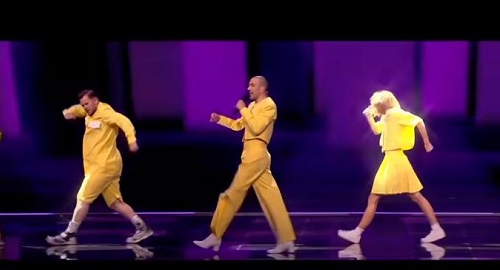
Perennial Eurovision Baddys Russia accidentally sent a goody. Not only did she have a good song and performance, but also a positive message.


Greece's entry really shouldn't have let Barry Letts direct her CSO-heavy dance routine. It's not the UNIT era any more, lol!

Other entries that I enjoyed included Iceland, with its colourful wheel of keytars, and reliable old Sweden had a great entry as usual. 


Lithuania was my favourite in the end, with a quirky, silly song and dance.

The actual voting was as baffling as ever - you can always tell it is mannys who vote for these things, what with their thumbs meaning they can use the telephone, and they don't always vote for who their cats tell them to, mew!
Plus the stupid system of assigning the votes has been kept on from two years ago, and my critcisms from then are just as true now.

The UK and Germany did particularly badly this time, with the UK getting no points at all from anybody. I for one couldn't tell why mannys across the whole of Eurovision liked the entries from Switzerland and (eventual winner) Italy so much more than those. None of them were as good as cat singing anyway.

Monday, 17 May 2021

Good Omens


The novel from 1990 is one of my very favourites, and manages to be better than anything else I have read by either of the two authors individually - this includes over 30 of Terry Pratchett's Discworld books, although I must admit I am less familiar with the oeuvre of Neil Gaiman, seeing as that includes a lot of comics and short stories.

Good Omens sends up The Omen film series (as well as a few other films in the very niche sub-genre of 'Apocalyptic Antichrist Horror') while at the same time requiring its readers to have no knowledge of the thing it is sending up.
From the running gag about Elvis being still alive (which made it into the TV series in the form of an 'Easter Egg' for fans of the book to spot) to the footnote explaining pre-decimalisation British currency, the book is packed with witty wordplay and Laugh-Out-Loud comic moments for the reader, even as the characters are taking very seriously the imminent rise of the Antichrist and ending of the world.

But I'm now going to spend the rest of this post talking about the TV adaptation from 2019, starting with


The Good

It was just so much fun to see the TV series after so many years of waiting. It's such a great story and has deserved to get a decent visual (film or TV) adaptation for so long. The BBC Radio 4 series was good, and contained a near-perfect cast (arguably even better on the whole than the TV series), but the lack of visuals left it somehow feeling incomplete and unsatisfying.

The decision to have God as the omniscient narrator delivering many of the book's asides in the style of the Hitch-Hikers Guide to the Galaxy was a great one (even if Her casting was, shall we say... unorthodox), allowing many of my favourite moments to make it to screen, including Aziraphale and Crowley dancing - on the head of a pin or otherwise - and Mr R P Tyler's hesitation over pointing out that Crowley's car is on fire.

David Tennant and Michael (not Martin) Sheen as Crowley and Aziraphale bring a kind of star quality to the TV series (as well as having amazing chemistry together, as was later also seen in their lockdown sitcom Staged). No wonder their parts were expanded to make them indisputably the central characters, rather than the more ensemble cast of the novel.
They would not have been my first choice for playing the characters - in my opinion Peter Serafinowicz and Mark Heap from the radio series are more faithful to the book versions - but Sheen & Tennant won me over very quickly.

The final item for this list is Dog, who steals every scene he's in.


The Bad

The WW2 Nazis scene with Mark Gatiss and Steve Pemberton at the start of episode three I found to be unfunny and way too OTT, bordering on the level of Panto (when Tennant arrives in the scene he reminded me of some of the more annoying character tics from his time in Doctor Who). I can see its purpose in both continuing to develop Crowley and Aziraphale's relationship over the course of history (including setting up the holy water plot device for later) and establishing the significance of The Nice and Accurate Prophecies of Agnes Nutter (Witch), but I think the screen time spent on this scene could have been better used by doing the subplot from the novel about the publishers Bilton and Scaggs, they of the three great publishing disasters, who could even have been played just as well by Gatiss and Pemberton.

Jack Whitehall as Newton Pulsifer is easily the most miscast actor in this. He could have been fine in the small role of Witchfinder Major Thou-Shalt-Not-Commit-Adultery Pulsifer, but not as Newt, one of the main characters and a personal favourite of mine from the novel. He is the Martin Freeman of this series - he just rubs me up the wrong way every time he's on screen.

Some of the CGI is unforgivably bad, such as the explosion at the burning of Agnes Nutter - made worse by the fact that, like the tank in the third cliffhanger of Robot, we see it more than once - or the appearance of Satan in the last episode that manages to look worse than the CGI monster in the Doctor Who episode The Satan Pit, despite that being from 13 years earlier.
This is all the more surprising because so much of the SFX in Good Omens are really effective, from their realisation of the walled Garden of Eden through to the M25 motorway being on fire, and it makes the poor effects stand out even more.
And, to be clear, I am not including in this category the CGI that was made deliberately unconvincing 'bad' for comic effect, such as Dog's original hellhound face or Crowley's scary face from when he's scaring the manny from The Thick of It.


The Neither Good Nor Bad On The Whole, or The Equally Good And Bad (Do You See What I Did There?)

The addition of so much extra material, which mainly serves to increase the focus on Crowley and Aziraphale, leaves less screen time for other things from the book, such as the Four Horsemen. They are underdeveloped as antagonists as a result, certainly compared to Gabriel, Hastur, and the other angel and demon antagonists who we do spend time with since they are personal antagonists to the two leads.
Scenes taken from the book establishing War and Pollution much earlier in the story were filmed but consigned to the DVD Special Features only. I think including these would have helped establish their presence earlier, so their first appearances aren't when they are receiving their packages. And that's without me mentioning the other Four Horsemen, who are left out of the TV series entirely.

The largest addition comes with the extended ending, giving the story an additional climax centred on Aziraphale and Crowley, as they face their reckoning with Heaven and Hell respectively. Now, let's be honest here, the ending to the book is its weakest part - after a long, wonderful build up to the end of the world, it ends way too suddenly (the plot, I mean, not the world). Not for the first time in this article will I compare Good Omens to the books of Douglas Adams, when I say the abruptness of the ending is comparable to that found in his Dirk Gently novels, and for those too this is their biggest flaw.
Therefore, making an improvement to the ending was virtually the only way in which the TV series could improve upon the book. I'm no adaptation purist (although I hate gratuitous changes, such as those found in abundance in the Lord of the Rings movie trilogy), so would have counted this among The Good, except for the aforementioned fact that the additions necessitated the omission of other scenes I would have dearly loved to see on screen, something that belongs with The Bad.

So let's call this one, in the end, on balance, a draw.